Why Does My Dog Chase His Shadow? 5 Reasons (2026 Guide)
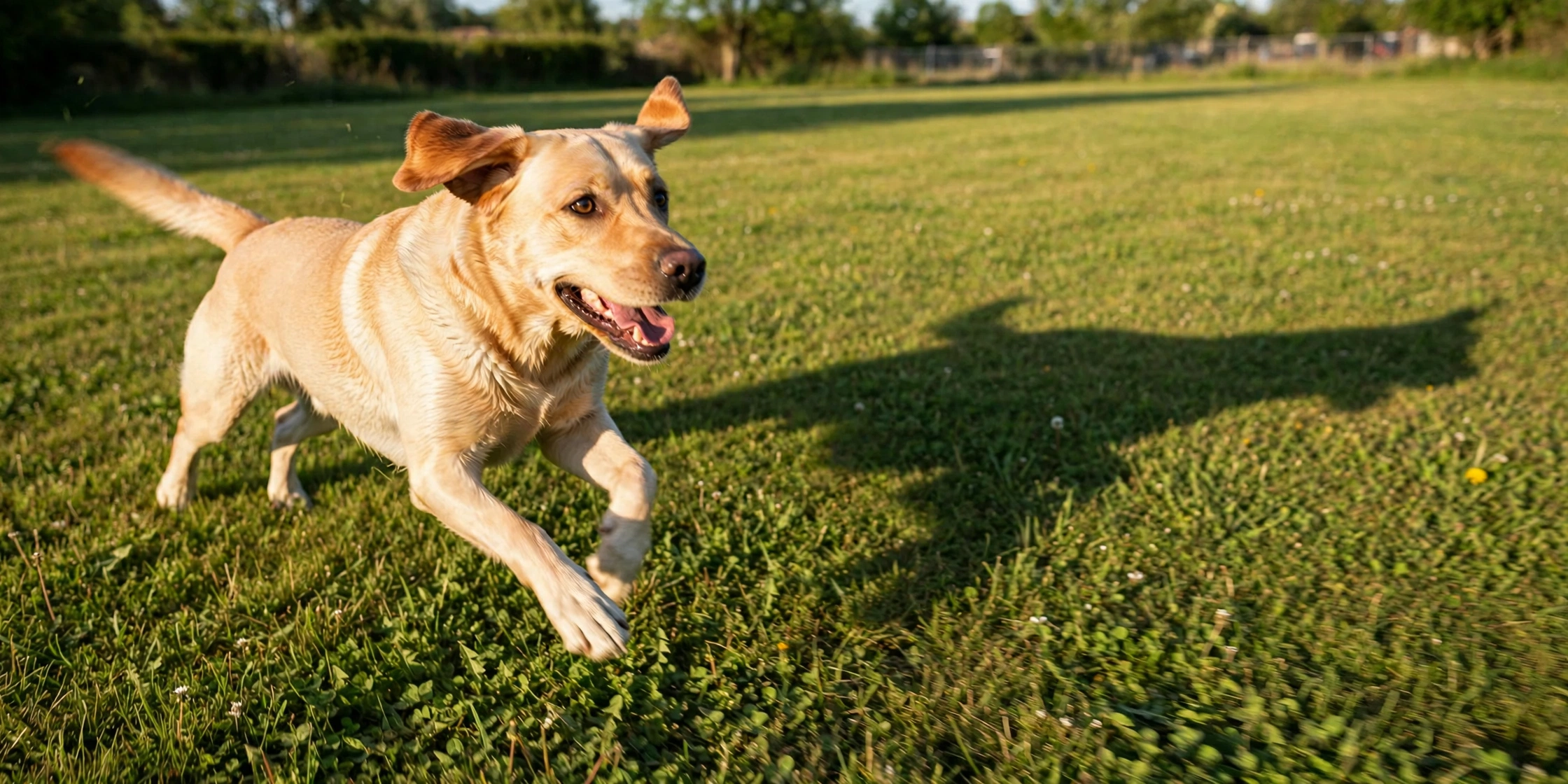
You notice it on a sunny afternoon: your dog spots the dark shape sliding along the ground beside him, and suddenly he’s spinning, pouncing, and sprinting after something that can never be caught — his own shadow. So why does my dog chase his shadow? In most cases it’s harmless play, but this quirky habit can also signal boredom, anxiety, or, in rare cases, a genuine compulsive disorder. Here’s what’s really behind it and exactly what to do.
1. Pure Play Instinct
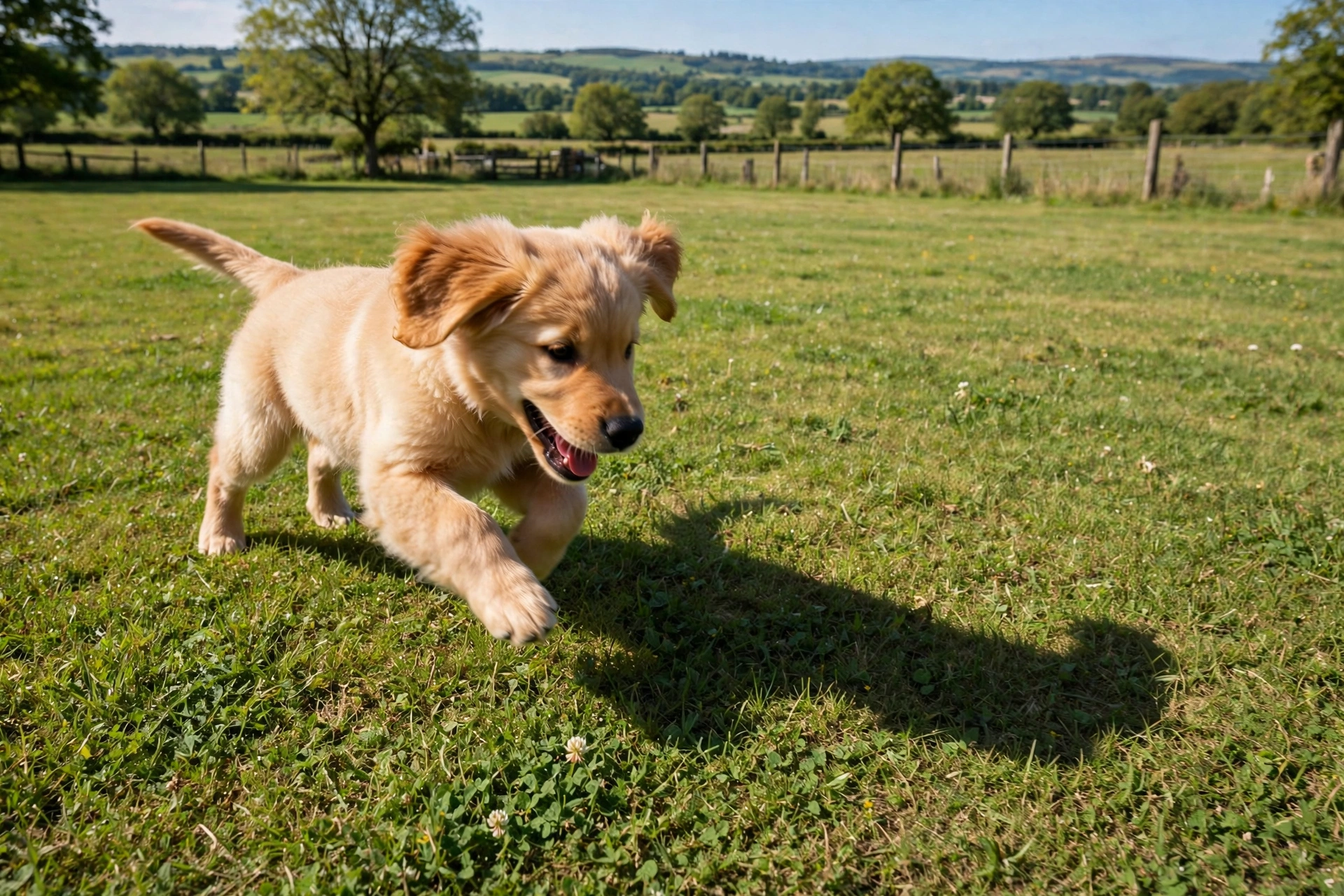
What it means: Dogs are hardwired to chase moving things — it’s the same prey drive that makes them bolt after squirrels and tennis balls. A shadow darting across the grass looks exactly like a tiny, fleeing creature. For puppies especially, this is often simple curiosity: the shadow is new, it moves, and discovering things with their mouth and paws is how puppies learn about the world.
What to do: If it happens once in a while and your dog is otherwise relaxed, enjoy the comedy. Puppies often outgrow the fascination once the novelty wears off — as long as you don’t accidentally turn it into a favorite game.
Helpful pick: YILAKO Flirt Pole Dog Toy — channel that chase drive into a structured game you control.
2. Boredom and Under-Stimulation

What it means: This is the most common reason behind persistent shadow chasing. Dogs with too little physical exercise and mental stimulation invent their own entertainment — and a shadow is always available. Working and herding breeds are especially prone: a Border Collie or Belgian Malinois with unspent energy will manufacture a job out of thin air, literally.
What to do: Audit your dog’s day honestly. Add one extra walk, swap five minutes of repetitive fetch for five minutes of scent work (hiding treats around the yard), and rotate puzzle feeders through the week. In most boredom-driven cases, the shadow fixation fades within a week or two of a busier routine.
Helpful pick: Outward Hound Nina Ottosson Dog Tornado Puzzle Toy — mentally exhausting in the best way; ten minutes equals a long walk for the brain.
3. You’ve Rewarded It (Attention-Seeking)

What it means: Be honest: did you laugh, film it, or call the dog’s name in a playful voice the first time it happened? Dogs repeat whatever gets a reaction. If shadow-chasing earns giggles, phone cameras, and excited voices, your dog has learned that spinning after shadows is a reliable way to make the humans entertaining.
What to do: Go boring. When the shadow chase starts, calmly redirect with a treat or a known cue like “sit” or “touch,” then reward the calm behavior. Never scold — punishment adds stress, which (see reason 4) only makes it worse. The goal is to make shadows irrelevant and make you far more interesting.
Helpful pick: Snuffle Mat for Dogs — a perfect redirect: scatter treats in it the moment you see shadow-fixation starting.
4. Anxiety or Stress Relief
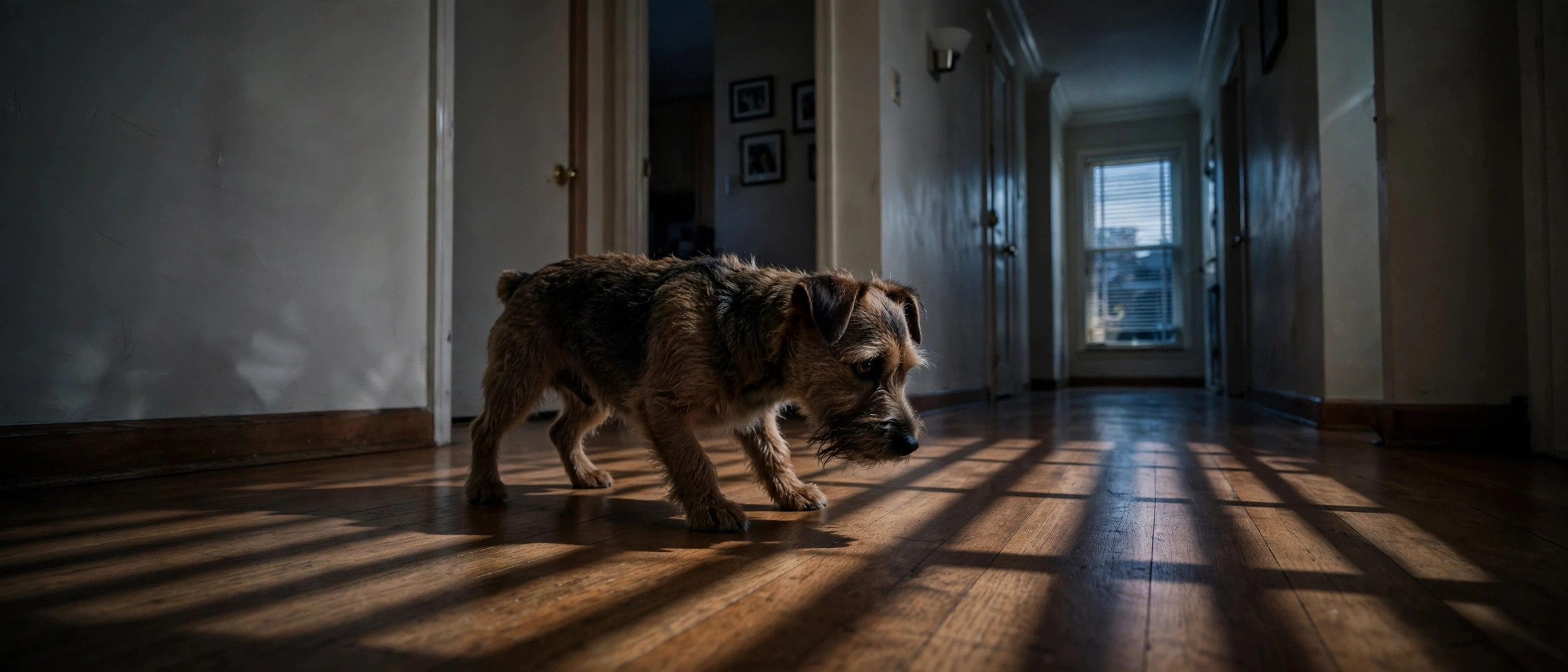
What it means: Repetitive behaviors are one of the ways dogs self-soothe when they’re stressed. Changes in the home — a move, a new pet, a new work schedule, loud construction — can trigger shadow fixation as a coping mechanism. Dogs that do this when anxious often show other signs too: lip licking, yawning when not tired, pacing, or clinginess.
What to do: Look for the trigger and address the environment first. Keep routines predictable, create a calm safe space, and increase gentle exercise. If your dog only shadow-chases during storms, fireworks, or when left alone, the real problem is the anxiety, not the shadows.
Helpful pick: ADAPTIL Calm Home Diffuser — releases dog-appeasing pheromones that support relaxation in the home.
5. Canine Compulsive Disorder (The Rare, Serious One)
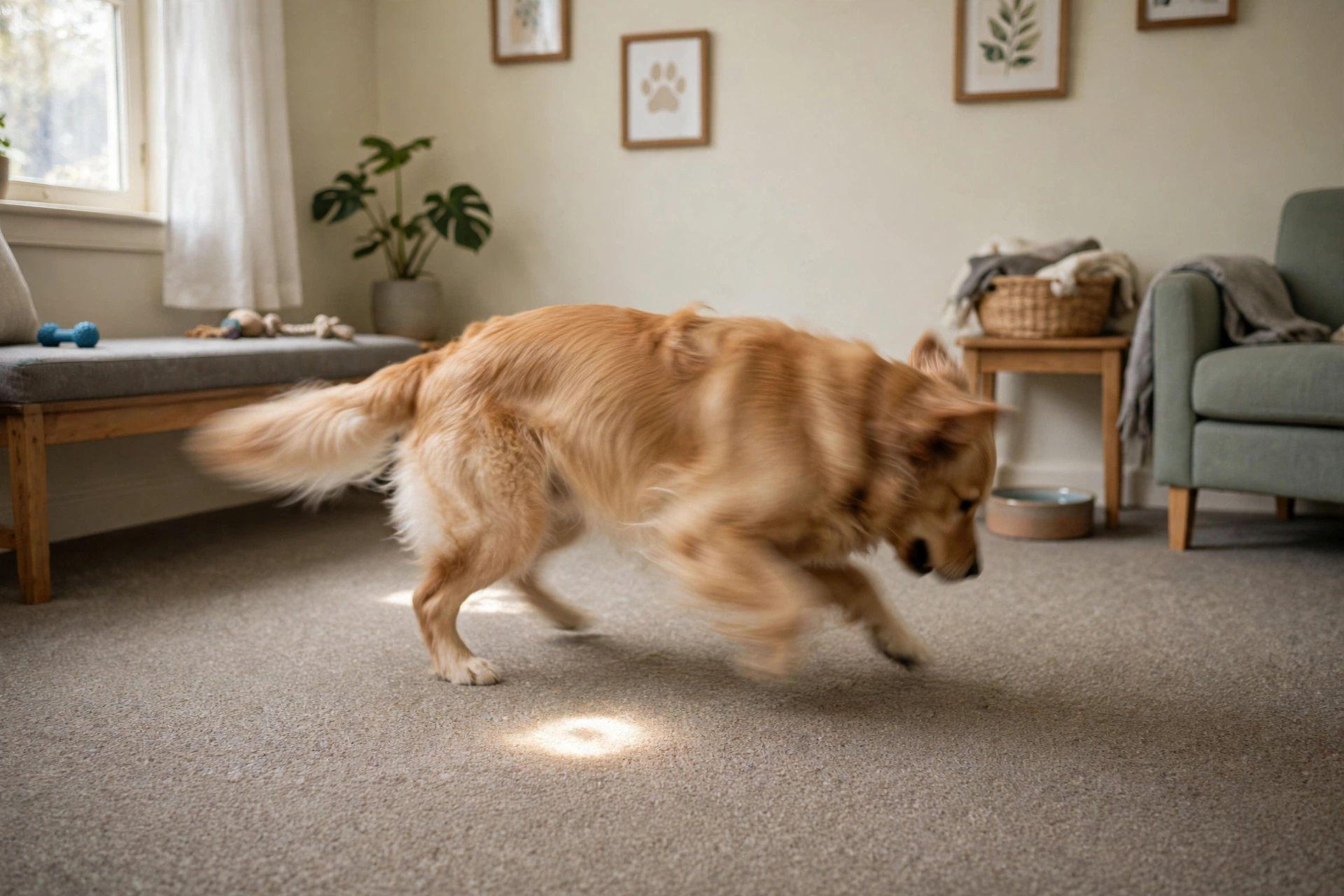
What it means: In a small number of dogs, shadow and light chasing becomes a genuine compulsive disorder — the canine equivalent of OCD. Red flags: the behavior is constant (daily, for long stretches), your dog can’t be interrupted even with high-value treats, it interferes with eating, sleeping, or walks, and it escalates over time. Certain breeds (Bull Terriers, German Shepherds, Border Collies, Labrador Retrievers) are genetically more susceptible.
What to do: See your veterinarian. This is the one case where DIY management isn’t enough — canine compulsive disorder is a medical condition that often needs a combination of behavioral modification and medication prescribed by your vet or a veterinary behaviorist. The earlier you intervene, the better the outcome.
Helpful pick: Chuckit! Sport Ball Launcher — ask your vet about pairing structured chase outlets with their treatment plan.
When Shadow Chasing Needs a Vet
Book a vet visit if any of these apply:
- The chasing happens multiple times a day and is getting more intense.
- Your dog ignores food, walks, or favorite toys to chase shadows.
- He can’t be snapped out of it, even with treats or commands he usually knows.
- You notice other repetitive behaviors: tail chasing, fly snapping at nothing, excessive licking, or spinning.
- It started suddenly in an adult dog (a vet check rules out vision changes, cognitive issues, or neurological causes).
Never try laser pointers as “exercise” — prolonged exposure to laser dots is one of the most documented triggers of light and shadow obsession in dogs, because the dog can never catch the target and the frustration compounds.
Frequently Asked Questions
Is it normal for puppies to chase their shadows?
Yes, occasional shadow chasing in puppies is completely normal curiosity. It only becomes a concern if it’s the highlight of your puppy’s day, every day, or if the puppy can’t be easily distracted from it.
How do I stop my dog from chasing shadows?
Redirect, don’t punish. Increase daily exercise and mental enrichment, ignore the shadow-chasing itself, reward calm behavior, and control the environment (close blinds during peak shadow hours). If the behavior persists despite a busier routine, talk to your vet.
Can shadow chasing turn into OCD in dogs?
It can. Occasional playful shadow chasing and canine compulsive disorder are different things, but a casual habit can escalate into a compulsion — especially in predisposed breeds or chronically under-stimulated dogs. Early intervention is key.
Should I let my dog play with a laser pointer instead?
No. Veterinary behaviorists strongly advise against laser pointers for dogs. The uncatchable red dot triggers the same obsessive chase loop as shadows, often worse, and there’s no satisfying “catch” to complete the sequence.
Does shadow chasing mean my dog is unhappy?
Not necessarily. A happy, well-exercised dog might chase a shadow once for fun. But if it’s a daily ritual, treat it as your dog’s way of saying “I need more to do” — and take him up on it.
Keep Reading
- How to Stop Your Dog from Chasing His Tail
- Why Does My Dog Get the Zoomies?
- The Best Puzzle Toys for Dogs
- 12 Signs Your Dog Is Stressed
As an Amazon Associate, PetPostHub earns from qualifying purchases.