
Why Does My Dog Sit on My Feet? 7 Sweet Meanings

You settle into your favorite chair with a cup of tea, and before you have even taken a sip, your dog walks over and plops down squarely on your feet. If you are wondering why your dog sits on your feet, take it as a compliment: in most cases, it is one of the sweetest signs of love and trust a dog can show. Dogs rarely do anything without a reason, and this cozy habit usually comes down to affection, comfort, warmth, or a little bit of instinct.
Below, we will unpack the 7 most common reasons your dog claims your feet as their favorite seat, what each one means, and the small things you can do to respond in a way that keeps your bond strong.
Table of Contents
- 1. Claiming You with Love (Affection)
- 2. Seeking Warmth
- 3. Anxiety or Separation Comfort
- 4. Guarding Instinct (“You’re Mine”)
- 5. Pack Behavior
- 6. Attention-Seeking
- 7. Learned Habit
- Should You Let Your Dog Sit on Your Feet?
- Frequently Asked Questions
1. Claiming You with Love (Affection)

What it means: The number-one reason dogs sit on feet is pure affection. Animal behaviorists describe this as the canine version of a hug. When your dog presses against you, physical contact releases oxytocin, the “love hormone,” in both of you, and the bond deepens with every cuddle session. Your feet are simply the easiest part of you to reach when you are sitting down.
What to do: Enjoy it! Give a calm ear scratch or a quiet word of praise. This is your dog telling you that you are their favorite person, and rewarding that gentle closeness keeps it coming. Many owners also notice their dog sits on their feet most often after they have been apart for a while, which makes the reunion even sweeter. If you work from home, you may find your dog parked on your toes for the entire workday, quietly soaking up your presence.
Helpful pick: Snuggle Puppy Heartbeat Stuffed Toy — a heartbeat toy that helps your pup feel close to you even when you are in another room.
2. Seeking Warmth

What it means: Your feet are warm, and dogs are heat-seekers, especially short-coated breeds, small dogs, and seniors. On chilly evenings, your toes are basically a heated dog bed. This habit often gets stronger in winter, which is a good clue that temperature is the motivator.
What to do: Nothing needs fixing, but you can give them their own warm alternative nearby. A self-warming bed or a cozy blanket placed at your feet satisfies the same need and keeps your toes free.
Helpful pick: Best Friends by Sheri Calming Donut Dog Bed — gives your dog their own warm, nest-like spot right beside your feet.
3. Anxiety or Separation Comfort
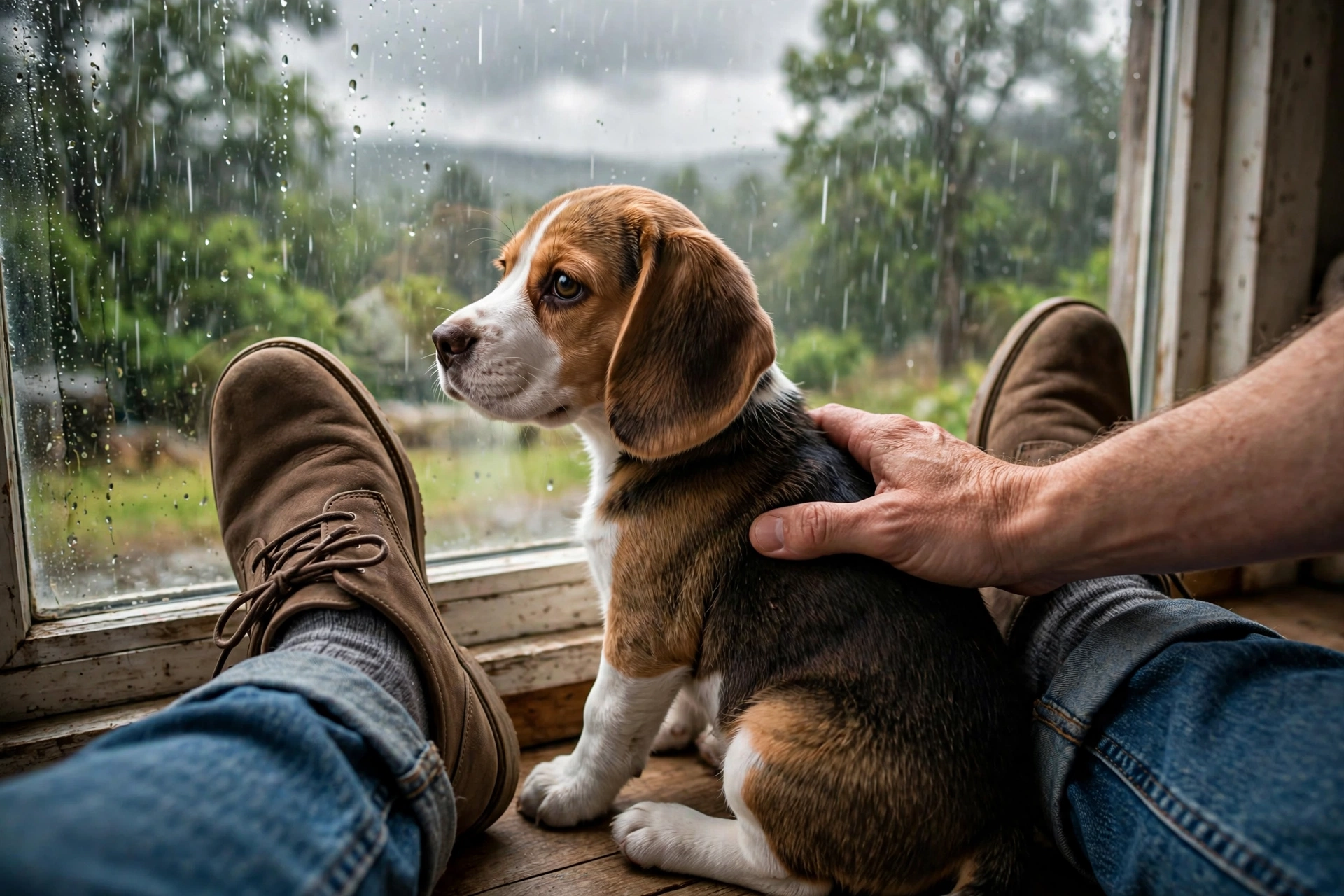
What it means: If your dog suddenly starts sitting on your feet more than usual, especially during thunderstorms, fireworks, vet visits, or in unfamiliar places, it is likely seeking security. Staying as close as possible to their trusted person is how anxious dogs calm themselves. Watch for other stress signals like panting, lip licking, tucked tail, or trembling.
What to do: Stay calm yourself, offer gentle reassurance, and avoid scolding. For recurring anxiety, a calming routine and a pheromone diffuser can make stressful moments easier. If the behavior is sudden and intense, a vet check is worth it to rule out pain or illness. Also pay attention to timing: if feet-sitting ramps up right before you leave the house, it may be an early sign of separation anxiety, and practicing short, positive departures can help your dog feel more confident alone.
Helpful pick: ADAPTIL Calm Home Diffuser — supports a calmer mood during storms, travel, and other stressful moments.
4. Guarding Instinct (“You’re Mine”)
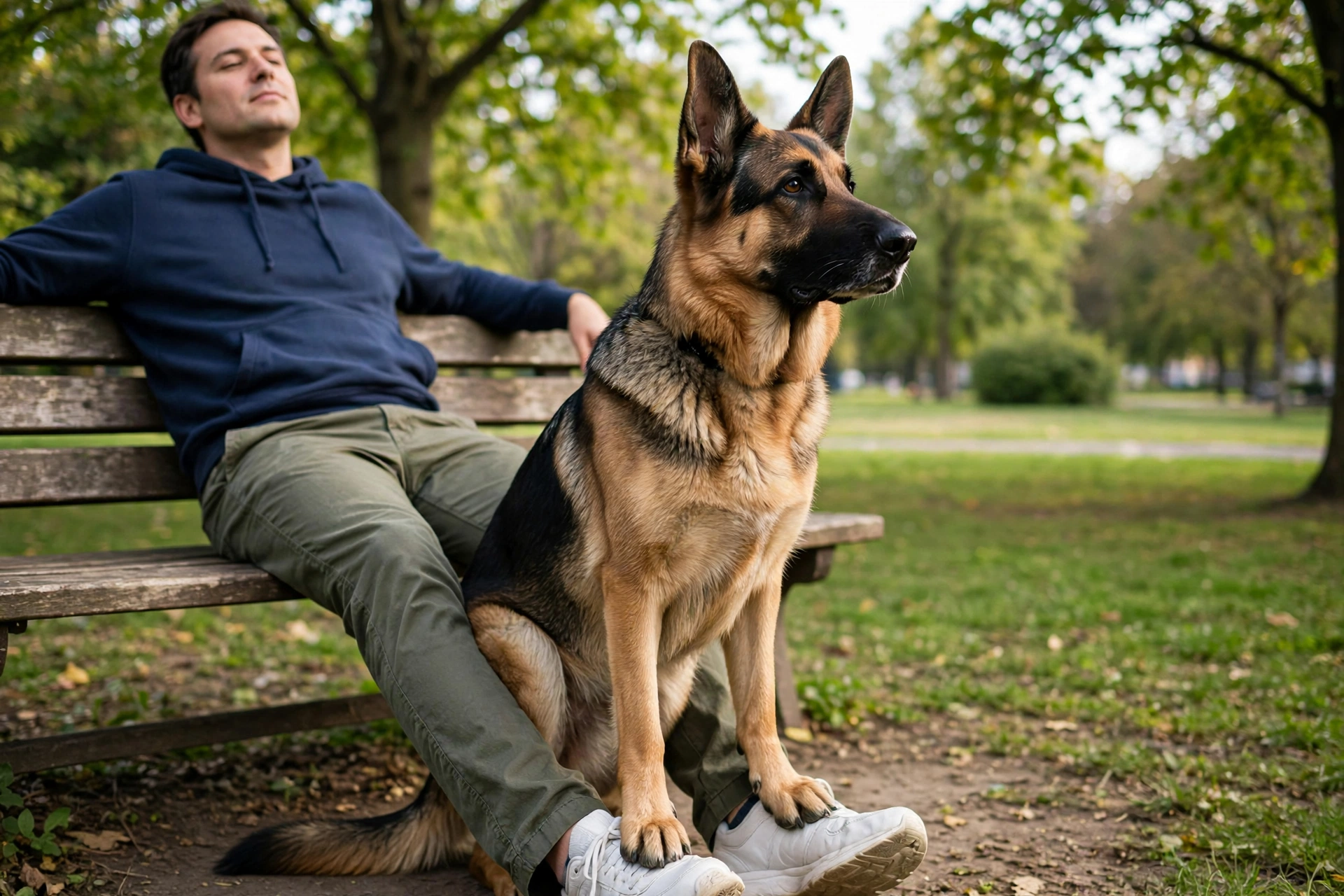
What it means: Some dogs sit on your feet as a gentle way of staking a claim, signaling to other dogs, “This is my person.” You might notice it most at the dog park or when guests visit. This is usually mild, loving possessiveness, not true aggression, but it is worth watching if it ever escalates into growling when others approach.
What to do: For normal guarding, simply enjoy the loyalty. If your dog stiffens, stares, or growls at people who come near, reward calm, relaxed behavior around guests instead and keep greetings low-key. Consistent, reward-based training turns possessiveness into polite confidence.
Helpful pick: Egiao Dog Treat Pouch — keeps rewards handy so you can reinforce calm greetings when guests approach.
5. Pack Behavior
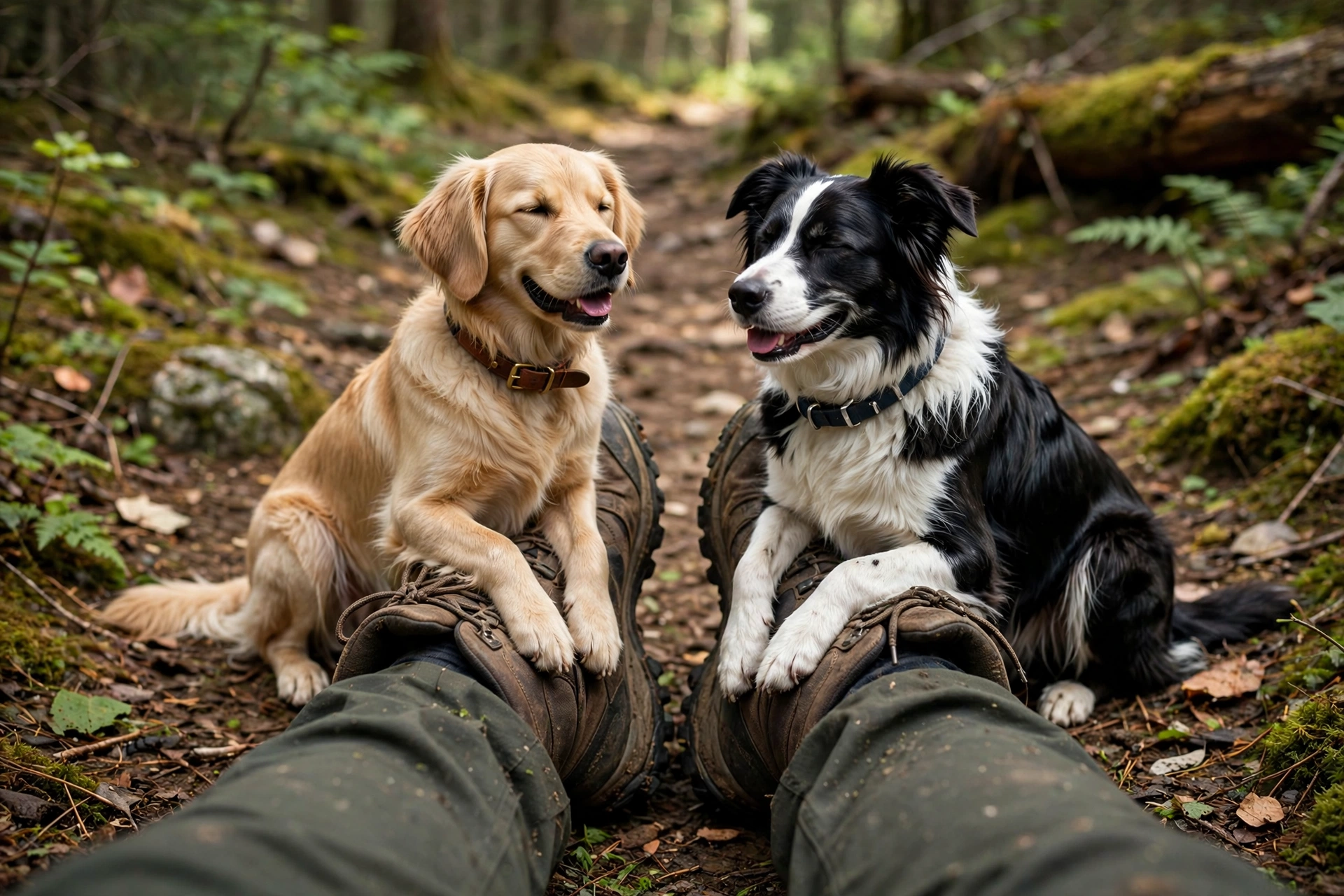
What it means: Dogs are pack animals, and sleeping or resting in physical contact with their family is deeply wired into them. When your dog sits on your feet, they are saying you are family. Dogs that do this often sleep curled against you too and follow you from room to room. It is a sign of a secure, healthy attachment.
What to do: This is behavior worth celebrating. Regular play, walks, and training sessions together satisfy the same pack drive and make your dog feel even more connected to you. Dogs with a strong pack bond also tend to learn faster, since they are so eager to work with their person. A quick daily training session doubles as bonding time and mental exercise, which keeps the whole relationship thriving.
Helpful pick: Chuckit! Classic Ball Launcher — turn pack bonding into active playtime your dog will love.
6. Attention-Seeking

What it means: Sometimes the motivation is delightfully simple: your dog has learned that sitting on your feet gets a reaction. A laugh, a pet, even a sigh counts. Dogs repeat whatever works, and if feet-sitting reliably wins attention, it becomes a go-to strategy, especially in bored or under-stimulated dogs.
What to do: There is nothing wrong with enjoying the cuddles, but if it becomes constant or pushy, make sure your dog’s mental and physical exercise needs are met first. A tired, enriched dog demands less attention. Puzzle toys and training games redirect that clever brain beautifully. A short game of fetch or five minutes of trick training often satisfies the need behind the behavior far better than another lap around your ankles.
Helpful pick: Outward Hound Dog Tornado Puzzle Toy — redirects attention-seeking energy into a fun, rewarding challenge.
7. Learned Habit

What it means: You may have taught this behavior yourself without realizing it. Every time your dog sat on your feet and you responded with petting, praise, a treat, or even eye contact, you reinforced it. Dogs do not need many repetitions to lock in a pattern this rewarding.
What to do: If you love it, keep reinforcing it. If you would rather your dog settle elsewhere, teach an alternative like “go to your bed” and reward that instead. Never punish feet-sitting; simply make the other option more rewarding. A clicker makes this retraining fast and fun. Place the bed exactly where your dog already likes to settle, such as beside your chair, so the new habit feels like an easy upgrade rather than a loss.
Helpful pick: STMK Dog Training Clicker Kit — perfect for shaping a new settle spot with clear, positive markers.
Should You Let Your Dog Sit on Your Feet?
In almost every case, yes. Sitting on your feet is a normal, healthy behavior and one of the clearest signs of a strong bond. It only becomes a problem in a few situations: if your dog growls or snaps when someone approaches while they are on your feet, if the behavior is driven by intense anxiety, or if a large dog makes it physically difficult for you. In those cases, address the underlying cause (anxiety, possessiveness, or lack of boundaries) with calm, reward-based training rather than punishing the cuddling itself.
Keep reading:
- Why Does My Dog Lean on Me?
- Why Does My Dog Follow Me Everywhere?
- 15 Signs Your Dog Loves You
- Dog Body Language Guide
- Signs Your Dog Is Stressed
Frequently Asked Questions
Is it normal for my dog to sit on my feet all the time?
Yes, it is completely normal, especially in affectionate, people-oriented breeds. It becomes worth a closer look only if the behavior started suddenly, is paired with signs of stress or illness, or interferes with daily life.
Does my dog sitting on my feet mean they are dominant?
No. Despite the old myth, feet-sitting is not a dominance display. True dominance-related behaviors are rare in pet dogs. This habit is far more likely about affection, warmth, comfort, or simply a learned routine.
Why does my dog sit on my feet but not my partner’s?
Dogs often choose the person they feel closest to, or the one who rewards them most consistently. If you give the ear scratches, the treats, and the warmest lap, your feet win by default.
How do I stop my dog from sitting on my feet?
Teach an alternative behavior like “go to your bed” and reward it generously. Avoid pushing or scolding your dog; simply make the bed the most rewarding spot in the room and the habit will shift on its own.
Why does my dog sit on my feet at the dog park?
At the park, feet-sitting often combines affection with mild guarding or nervousness. Your dog may be checking in with you, claiming you gently, or seeking reassurance in a stimulating environment. All are normal.
As an Amazon Associate, PetPostHub earns from qualifying purchases.



One Comment