Why Does My Dog Stomp His Feet? 6 Reasons

If you’ve ever watched your dog dramatically slam his front paws on the floor like a toddler mid-tantrum, you’ve probably wondered why does my dog stomp his feet. Is he throwing a fit? Is he trying to tell you something? Is something wrong?
Foot stomping is one of those dog behaviors that’s equal parts hilarious and confusing. It looks dramatic — sometimes it’s a gentle tap-tap-tap, sometimes it’s a full theatrical stomp. The good news is that in most cases, stomping is just your dog’s colorful way of communicating. Below, we’ll break down the six most common reasons dogs stomp their feet, what each one means, and how you should respond.
Quick Answer: Why Dogs Stomp Their Feet
Most dogs stomp their feet to communicate strong feelings — usually frustration, excitement, or a demand for attention. Puppies often stomp as a play invitation, while adult dogs may stomp when they’re impatient (waiting for dinner), overexcited (you just grabbed the leash), or anxious. Occasionally, stomping signals pain or irritation in the paws, so always rule that out if the behavior is new or one-sided.
Table of Contents
- 1. Frustration or Impatience
- 2. Pure Excitement
- 3. Demanding Your Attention
- 4. A Play Invitation
- 5. Anxiety or Restlessness
- 6. Pain or Paw Irritation
- Stomping vs. Paw Tapping: What’s the Difference?
- Frequently Asked Questions
1. Frustration or Impatience

What it means: This is the number-one reason dogs stomp their feet — your dog wants something and isn’t getting it fast enough. Maybe you’re taking too long to open the treat bag, the ball rolled under the couch, or dinner is five minutes late. Stomping is your dog’s version of tapping his watch and sighing. It’s a physical release of pent-up frustration, similar to a human huffing or rolling their eyes.
What to do: First, don’t give in immediately — that rewards the stomping and turns it into a learned demand habit. Instead, calmly ask for a polite behavior first (a sit or a down), then reward that. If your dog stomps because he’s stuck on a puzzle, give him a moment to problem-solve on his own before stepping in; frustration tolerance is a skill worth building.
Helpful pick: Outward Hound Tornado Puzzle Toy — great for channeling frustrated energy into problem-solving play.
2. Pure Excitement
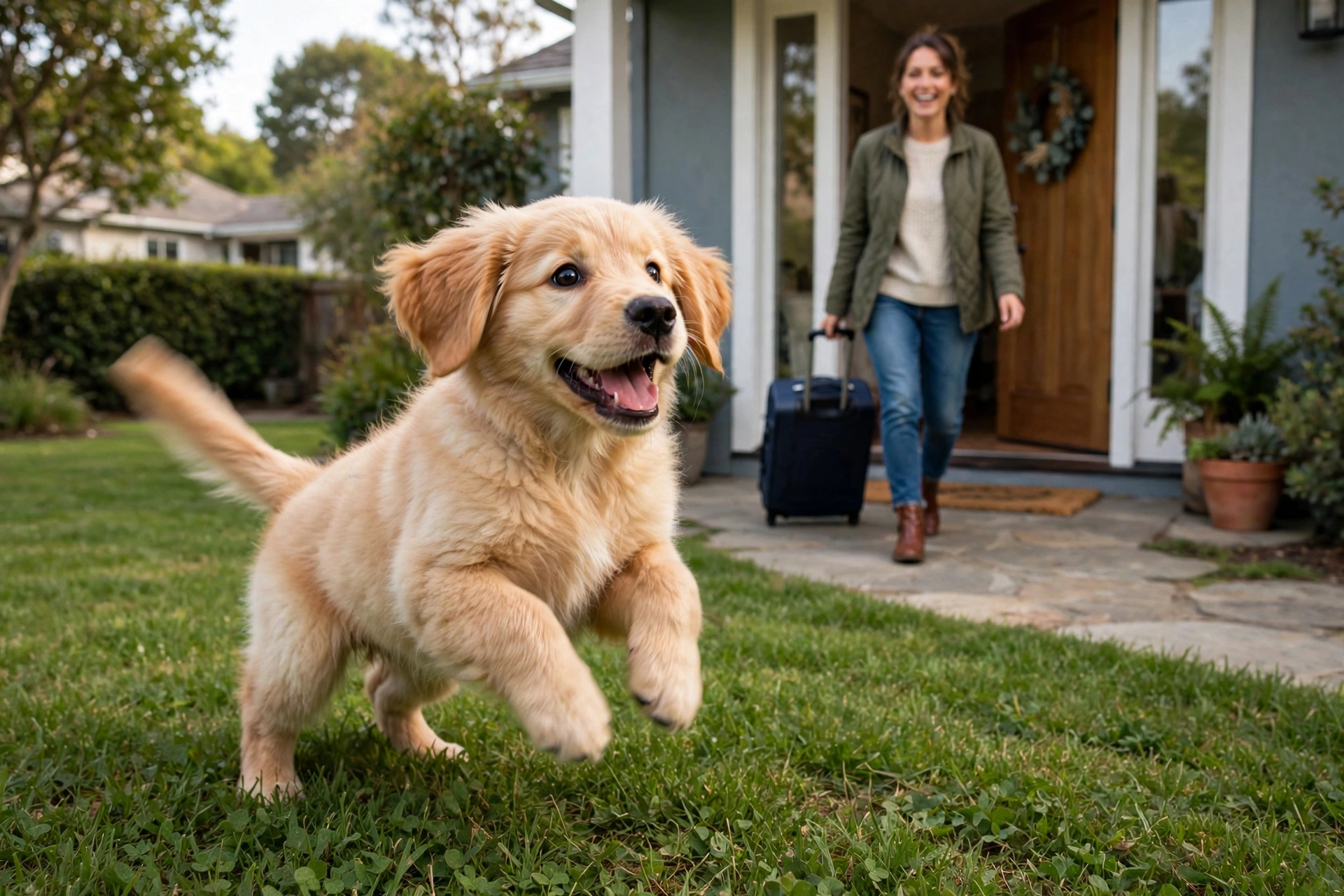
What it means: Some dogs stomp when they’re bursting with joy they physically can’t contain — you come home, grab the leash, or reach for the toy basket. The stomping comes bundled with a wagging tail, bouncy body, and sometimes happy vocalizations. It’s your dog’s happy dance, and stomping is just how the celebration comes out.
What to do: Enjoy it — excited stomping is a sign of a happy, engaged dog. If the excitement tips into overarousal (jumping, nipping, zoomies), pause and wait for four paws on the floor before continuing the fun. Teaching a “settle” cue gives excited dogs an off-switch for big feelings.
Helpful pick: KONG Classic — stuff and freeze it for a calming post-excitement cool-down.
3. Demanding Your Attention
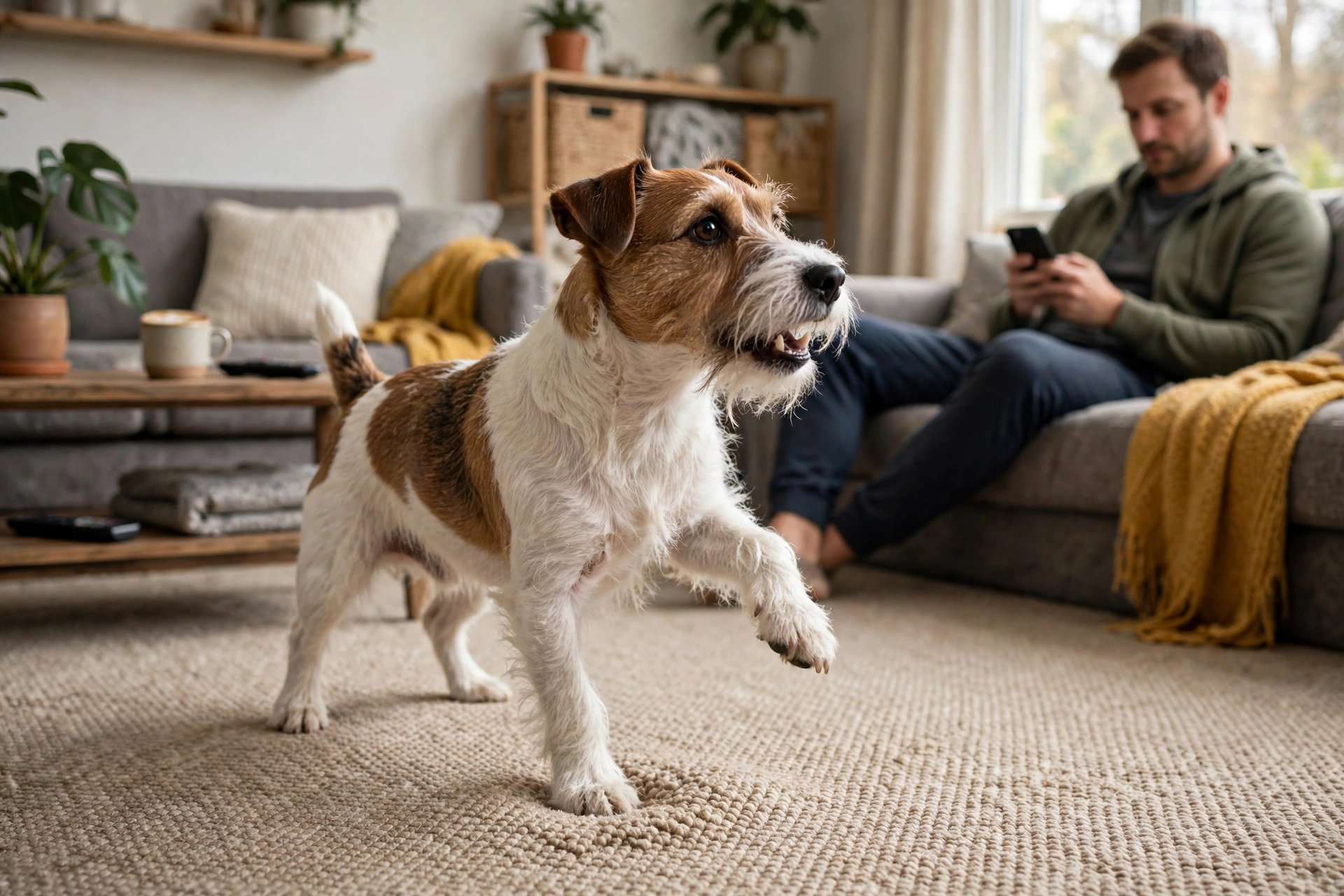
What it means: If your dog stomps while staring directly at you — especially when you’re busy on the phone or laptop — he’s learned that stomping gets results. Dogs are excellent observers, and if stomping earned a reaction in the past (even a frustrated one), they’ll file it under “things that work on humans.” This is learned communication, pure and simple.
What to do: Don’t reward demand stomping with what he’s after in that moment — instead, redirect him to a polite alternative like sitting with eye contact, then reward that generously. Also make sure his daily needs (exercise, play, training, enrichment) are met; dogs demand less attention when their buckets are full. Keep a treat pouch on you so you can catch and reward calm, polite check-ins throughout the day.
Helpful pick: Egiao Dog Treat Pouch — keeps rewards handy so you can reinforce polite behavior all day long.
4. A Play Invitation

What it means: Foot stomping is a classic play invitation, especially in puppies and young dogs. Paired with a play bow (front end down, rear end up), bouncy movements, and a waggy tail, stomping says “Come on, let’s have fun!” Dogs also stomp at each other during play as a way to rev up the energy or signal “I’m still playing, don’t take this seriously.”
What to do: If you’re up for playtime, respond — interactive play is one of the best bond-builders there is. Keep sessions short and fun, and always end on a high note. If the stomping is aimed at another dog who’s clearly not interested (turning away, freezing, growling), calmly redirect your dog and give the other dog space. Not every dog wants to party.
Helpful pick: Chuckit! Classic Ball Launcher — turns that stomping energy into a proper game of fetch.
5. Anxiety or Restlessness

What it means: Repetitive stomping — especially at night, during storms, or in new environments — can be a self-soothing behavior or a sign of restless anxiety. The dog is discharging nervous energy through his feet. Look for accompanying stress signals: panting, lip licking, yawning, pacing, or a tucked tail. If you’d like a fuller breakdown of these cues, see our guide on signs your dog is stressed.
What to do: Don’t punish anxious stomping — that adds stress to stress. Instead, create calm: a predictable routine, a cozy den-like resting spot, and calming enrichment like a lick mat or stuffed Kong. For storm or firework anxiety, a snug-fitting anxiety wrap and white noise can take the edge off. If anxiety is frequent or severe, talk to your vet about a behavior plan.
Helpful pick: Best Friends by Sheri Calming Donut Bed — the raised rim gives anxious dogs a den-like spot to decompress.
6. Pain or Paw Irritation

What it means: When stomping is new, one-sided, or paired with limping, licking one paw, or flinching when touched, it may be your dog’s way of dealing with pain or irritation — a thorn, a foxtail, a cracked pad, an insect sting, or even an early joint issue. Some dogs repeatedly lift and tap one foot when it hurts to bear weight on it.
What to do: Gently check the paw: look between the toes for debris, check pads for cuts or cracks, and watch for swelling or heat. If you find a minor splinter or thorn you can remove safely, do so and monitor. But if the stomping is persistent, the paw is swollen, or your dog won’t bear weight, see your vet promptly — pain-related behaviors always deserve a professional check, not a wait-and-see approach.
Helpful pick: Musher’s Secret Paw Wax — protects pads from hot pavement, ice melt, and rough terrain.
Stomping vs. Paw Tapping: What’s the Difference?
These two get confused a lot, so here’s the quick distinction. Stomping is bigger, more forceful, and usually emotional — frustration, excitement, or play. The whole body is often involved, and it tends to happen in bursts. Paw tapping, on the other hand, is usually lighter and more deliberate — a repeated tap-tap on your leg or the floor, most often a direct bid for attention or a learned way of asking for something.
Think of it this way: stomping is your dog expressing a feeling; tapping is your dog making a request. Both are communication, but they call for slightly different responses. For the lighter version, we break it down fully in why your dog taps his paws.
Frequently Asked Questions
Is foot stomping normal in dogs?
Yes — foot stomping is a normal communication behavior in most dogs, especially excitable, high-energy, or herding breeds. It only becomes a concern if it’s sudden, one-sided, obsessive, or paired with signs of pain or illness.
Why does my dog stomp his front feet at me?
When directed at you, stomping is usually a demand or an invitation — he wants play, treats, or your attention, and he’s feeling impatient or excited. Reward calm, polite alternatives instead of the stomp itself.
Why does my puppy stomp his feet?
Puppies stomp more than adult dogs because they’re still learning to regulate big emotions. For puppies, stomping is most often a play invitation or pure excitement overflow — totally normal developmental behavior.
Should I stop my dog from stomping his feet?
Don’t punish it — stomping is communication, and you don’t want to shut that down. Instead, figure out the cause (boredom, anxiety, excitement, pain) and address it, while teaching and rewarding the calmer behavior you’d prefer.
When should I worry about my dog stomping?
See your vet if the stomping is new and persistent, affects only one paw, or comes with limping, swelling, paw-licking, flinching, or appetite/behavior changes. Those can signal pain, injury, or neurological issues that need professional evaluation.
Keep Reading
- Why Does My Dog Tap His Paws? 6 Reasons
- Why Does My Dog Nose Punch? 6 Reasons
- Why Does My Dog Huff? 6 Reasons
- Dog Body Language Guide: What Your Dog Is Really Saying
As an Amazon Associate, PetPostHub earns from qualifying purchases.