Turkey Meatloaf for Dogs: Easy Homemade Recipe Your Pup Will Love
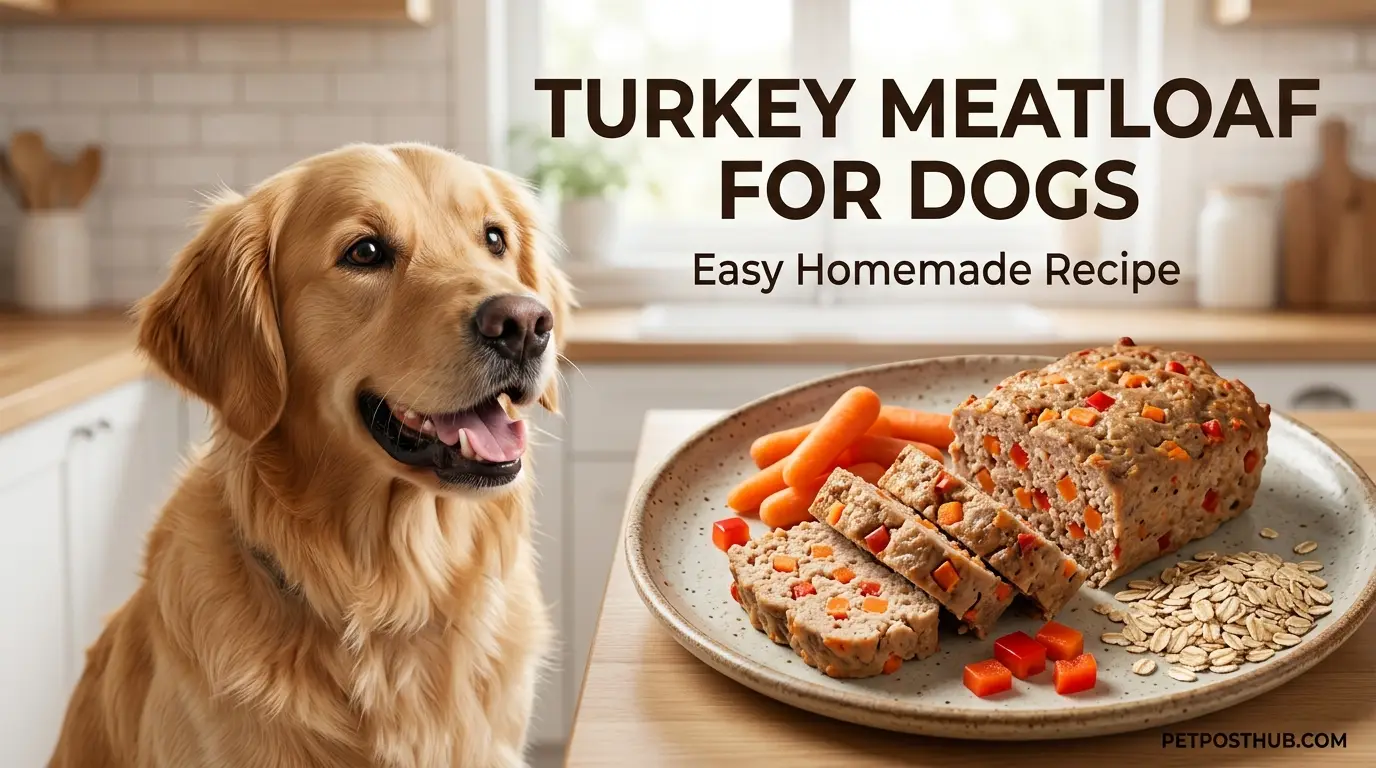
Homemade food can be a great way to give your dog a simple meal made from ingredients you recognize. This turkey meatloaf for dogs combines ground turkey, beef, eggs, oats, carrots, celery, and red bell pepper into an easy dog-friendly recipe.
The key is keeping the recipe free from common dog-toxic ingredients such as onions, garlic, excessive salt, and heavy seasonings. It is best used as an occasional meal or food topper rather than a long-term complete diet.
Ingredients
- 1 lb ground turkey
- 1 lb ground beef
- 2 eggs
- ½ cup old-fashioned oats
- 2 small carrots, grated
- 1 red bell pepper, finely diced
- 1 celery stalk, finely diced
How to Make Turkey Meatloaf for Dogs
1. Prepare the Oven
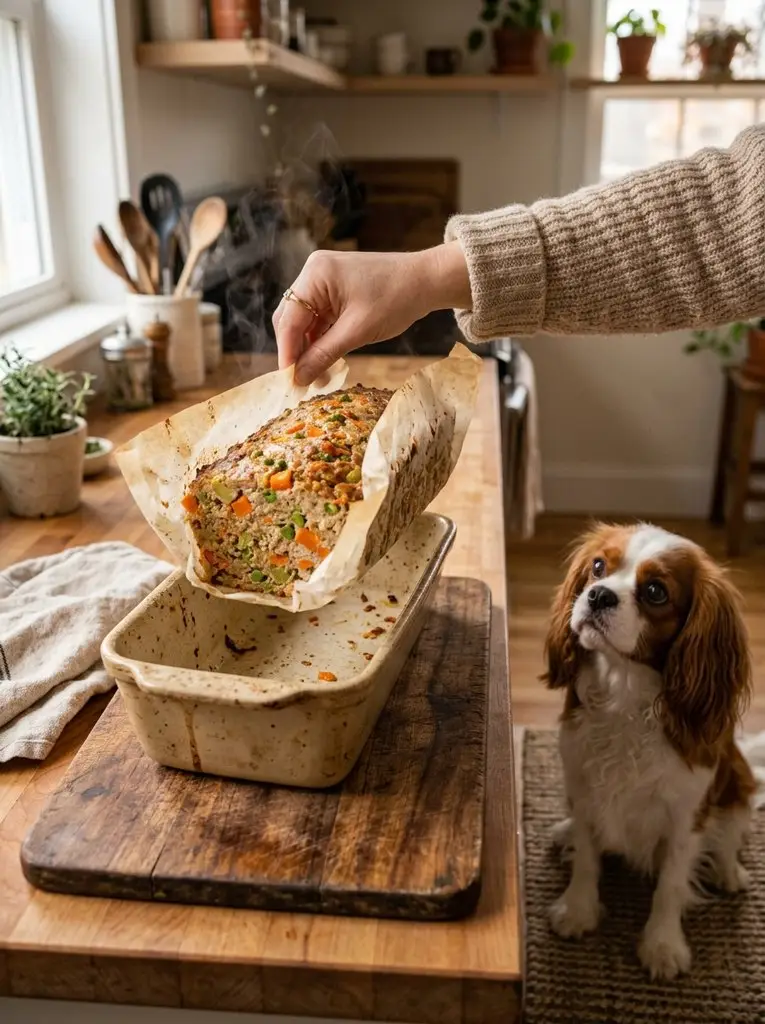
Preheat your oven to 350°F (175°C). Line a loaf pan with parchment paper to make the meatloaf easier to remove after baking.
2. Prepare the Vegetables
Grate the carrots and finely dice the bell pepper and celery. Keeping the vegetables small helps them cook properly and makes the finished meatloaf easier for your dog to eat.
3. Mix the Ingredients
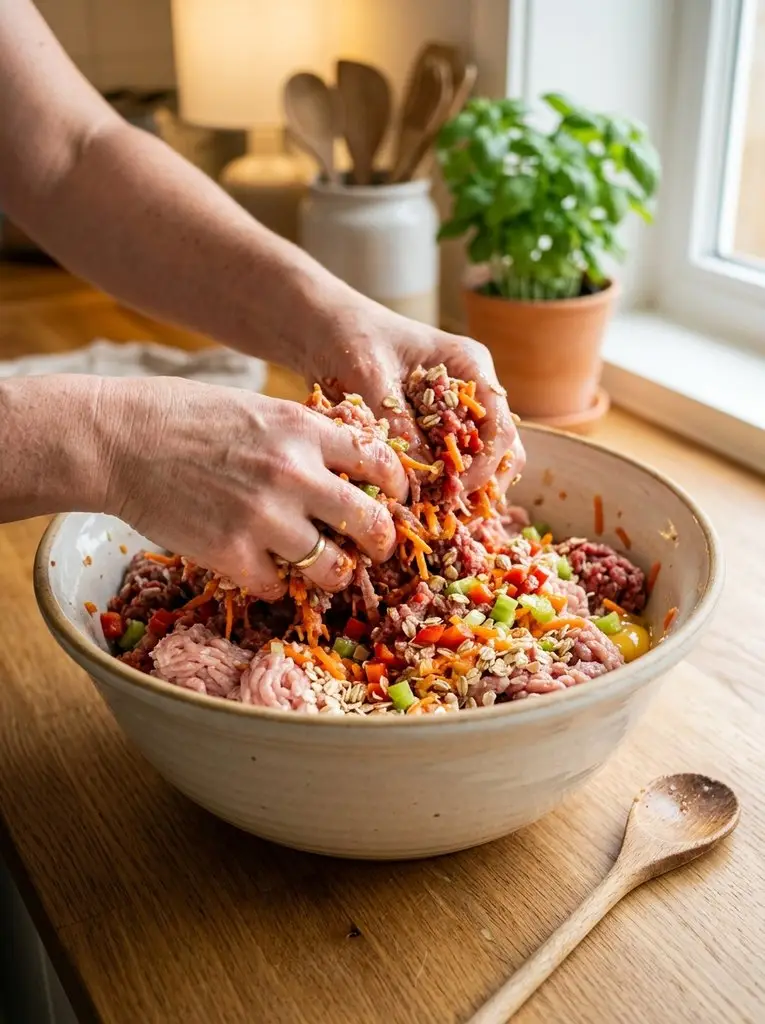
Add the turkey, beef, eggs, oats, and prepared vegetables to a large bowl. Mix until everything is evenly combined.
4. Shape and Bake
Press the mixture firmly into the prepared loaf pan and smooth the top. Bake for approximately 50–60 minutes, or until the center reaches 165°F (74°C).
5. Cool and Serve
Let the meatloaf cool before cutting it into small portions. Never serve it hot. Adjust the serving size according to your dog’s size, normal diet, activity level, and individual needs.
What Makes This Dog-Friendly Meatloaf?
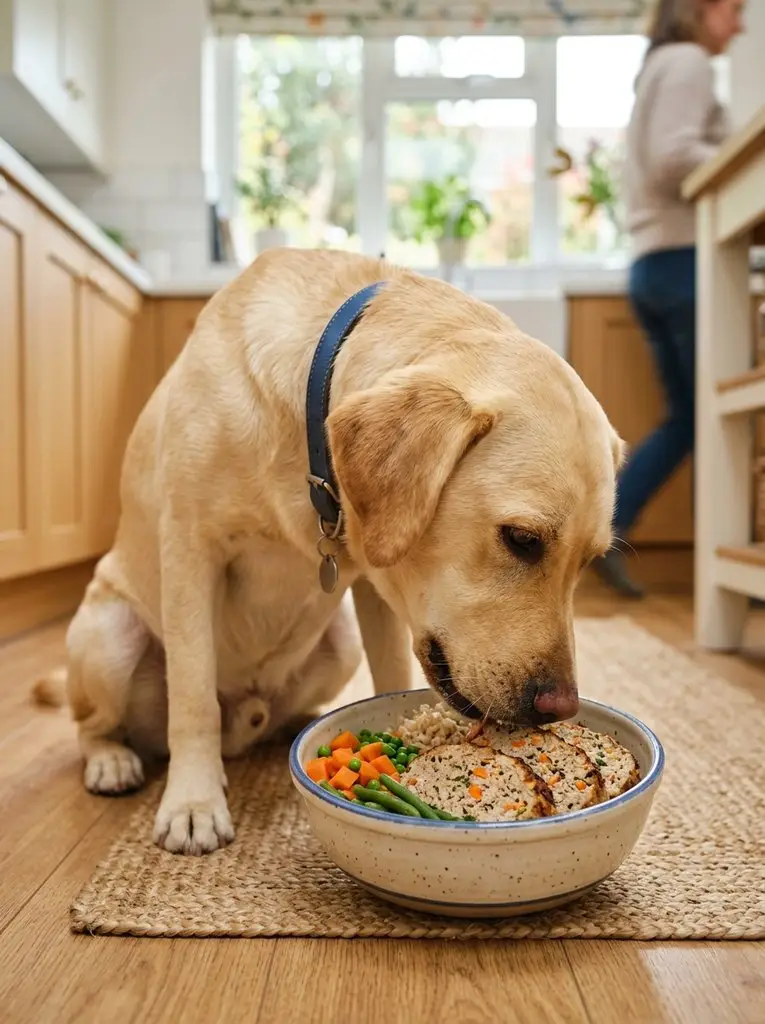
The recipe uses simple ingredients without the seasonings commonly found in human meatloaf. Turkey and beef provide protein, while eggs help bind the loaf and oats and vegetables add fiber and nutrients.
Most importantly, never add onion, garlic, chives, excessive salt, or seasoning blends to your dog’s portion.
How to Store It
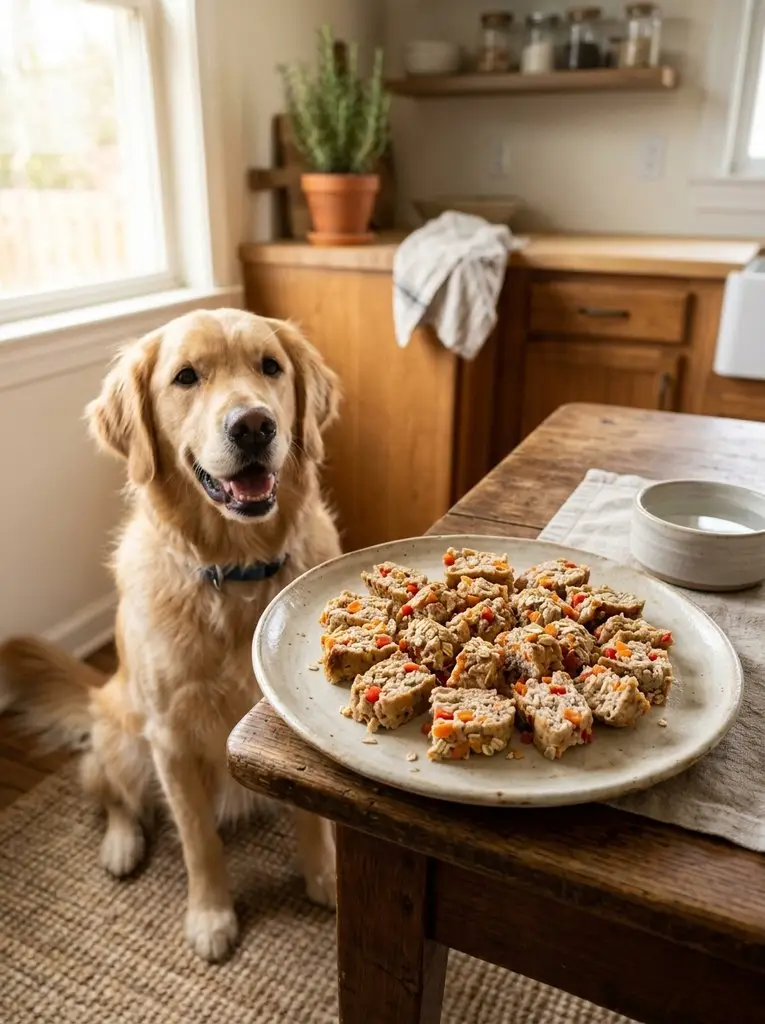
Keep cooled meatloaf in an airtight container in the refrigerator and use it within 3–4 days. For longer storage, freeze individual portions for convenient homemade dog meals.
Thaw frozen portions in the refrigerator and serve once cooled to a safe temperature.
How Much Turkey Meatloaf Can Dogs Eat?
There is no single portion that works for every dog. Start with a small amount and consider it part of your dog’s overall daily food intake.
For a healthy adult dog, homemade meatloaf can work well as a meal topper or occasional treat. Dogs with allergies, medical conditions, weight concerns, or special dietary needs should get personalized feeding advice from a veterinarian.
Easy Recipe Variations
Want to change the recipe? You can make a few simple swaps while keeping it dog-friendly:
- Use all ground turkey for a leaner recipe.
- Replace some vegetables with zucchini or green beans.
- Make mini meatloaf portions in a muffin pan.
- Add cooked sweet potato for a soft texture and extra fiber.
Always check that every ingredient is safe for dogs before making substitutions.
Frequently Asked Questions
Can dogs eat turkey meatloaf?
Yes, dogs can eat a homemade turkey meatloaf when it is prepared with dog-safe ingredients and cooked thoroughly. Avoid traditional meatloaf ingredients such as onion, garlic, excessive salt, and rich sauces.
Is turkey meatloaf a complete dog food?
No. This recipe is not designed to provide complete and balanced nutrition for long-term feeding. Use it as an occasional meal, topper, or treat unless a veterinary nutritionist has formulated a complete homemade diet.
Can puppies eat homemade turkey meatloaf?
Puppies have different nutritional requirements from adult dogs. Ask your veterinarian before using homemade meatloaf as part of a puppy’s regular diet.
Can I freeze homemade dog meatloaf?
Yes. Cut the cooled meatloaf into individual portions, wrap them well, and freeze them in an airtight freezer-safe container or bag.
Final Thoughts
This homemade turkey meatloaf for dogs is an easy way to turn a few simple ingredients into something special for your pup. Keep the recipe plain, cook the meat thoroughly, avoid toxic seasonings, and treat it as a supplement rather than a replacement for a properly balanced diet.
If your dog has a medical condition or follows a prescription diet, check with your veterinarian before introducing a homemade recipe.