Why Does My Dog Lick My Pillow? 5 Reasons
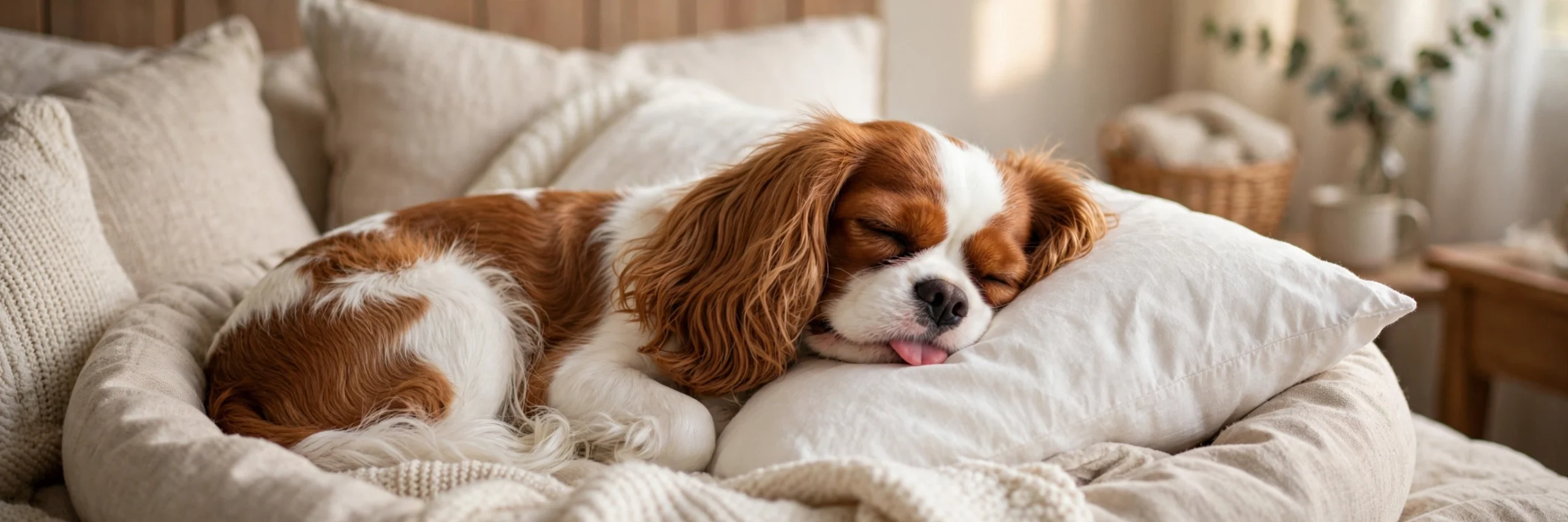
If you’ve ever caught your pup slurping away on your pillow like it’s the world’s best chew toy, you’ve probably wondered: why does my dog lick my pillow? It’s one of those funny-yet-slightly-gross dog quirks that leaves pillowcases damp and owners baffled.
The good news? Pillow licking is usually harmless. It’s most often a self-soothing habit, a sign your dog loves the way you smell, or simply the result of a bored mind in a quiet house. But in some cases, it can signal anxiety, boredom, or even an issue with the detergents you use. Let’s break down the five most common reasons your dog licks your pillow — and what you can do about each one.
Table of Contents
- 1. It’s a Self-Soothing Habit
- 2. Your Pillow Smells Like You
- 3. Anxiety or Stress
- 4. Boredom
- 5. They Like the Taste
- Is Pillow Licking Harmful?
- Frequently Asked Questions
1. It’s a Self-Soothing Habit
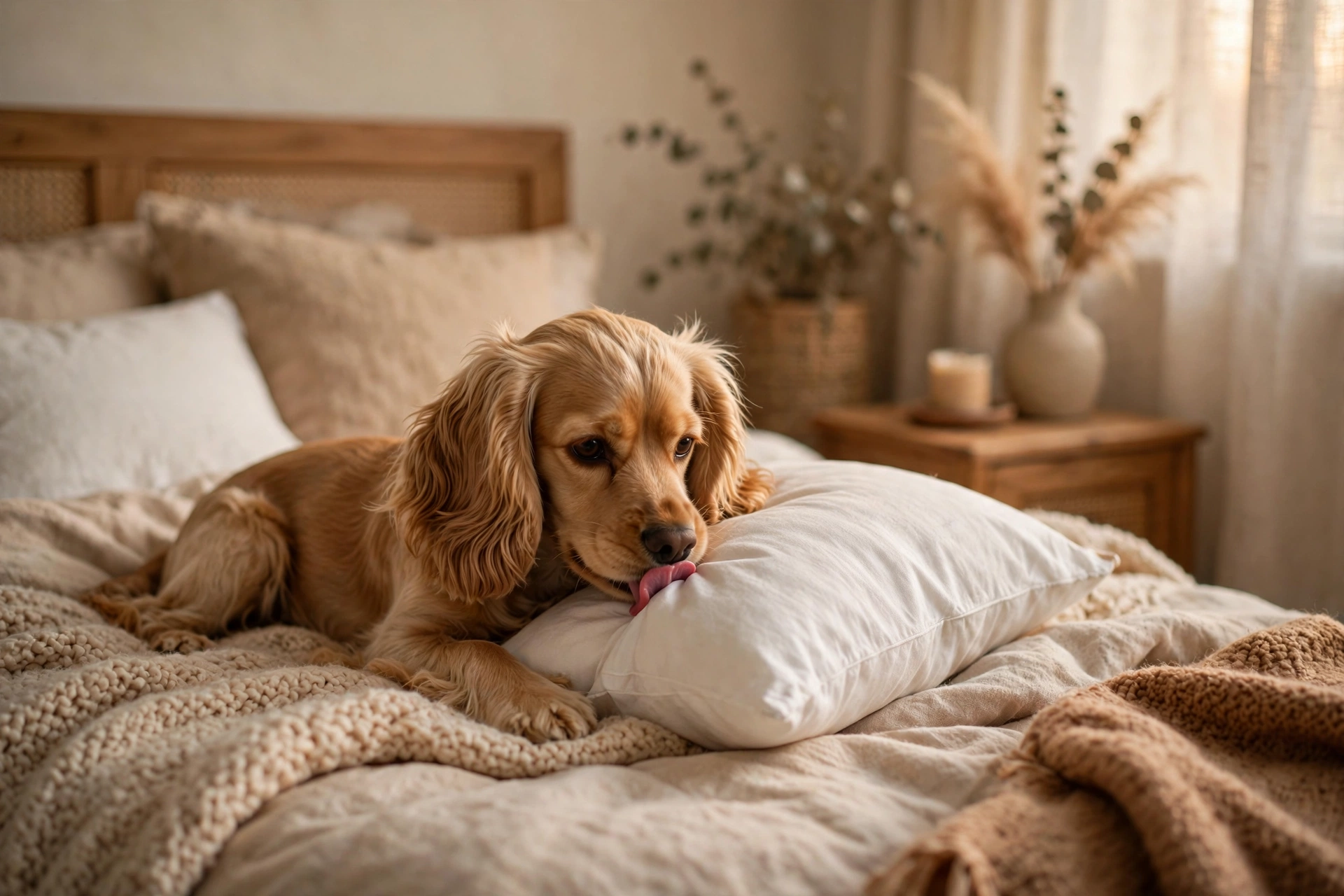
What it means: Just like some children suck their thumbs, many dogs lick soft surfaces to calm themselves down. The rhythmic, repetitive motion of licking releases endorphins — the brain’s “feel good” chemicals — which helps your dog relax. Dogs who started this habit as puppies, licking their mother’s belly or a soft blanket, often carry it into adulthood. Pillows are soft, warm, and comforting, making them the perfect target.
What to do: Occasional pillow licking for comfort is nothing to worry about. If it’s gentle and doesn’t destroy anything, you can simply let it be. But if you want to give your dog a healthier outlet, try offering a plush comfort toy designed specifically for anxious dogs. Giving your dog their own “comfort object” can redirect the habit away from your pillow.
Helpful pick: Snuggle Puppy Comfort Toy — a heartbeat plush designed to soothe anxious dogs, a great alternative to your pillow.
2. Your Pillow Smells Like You
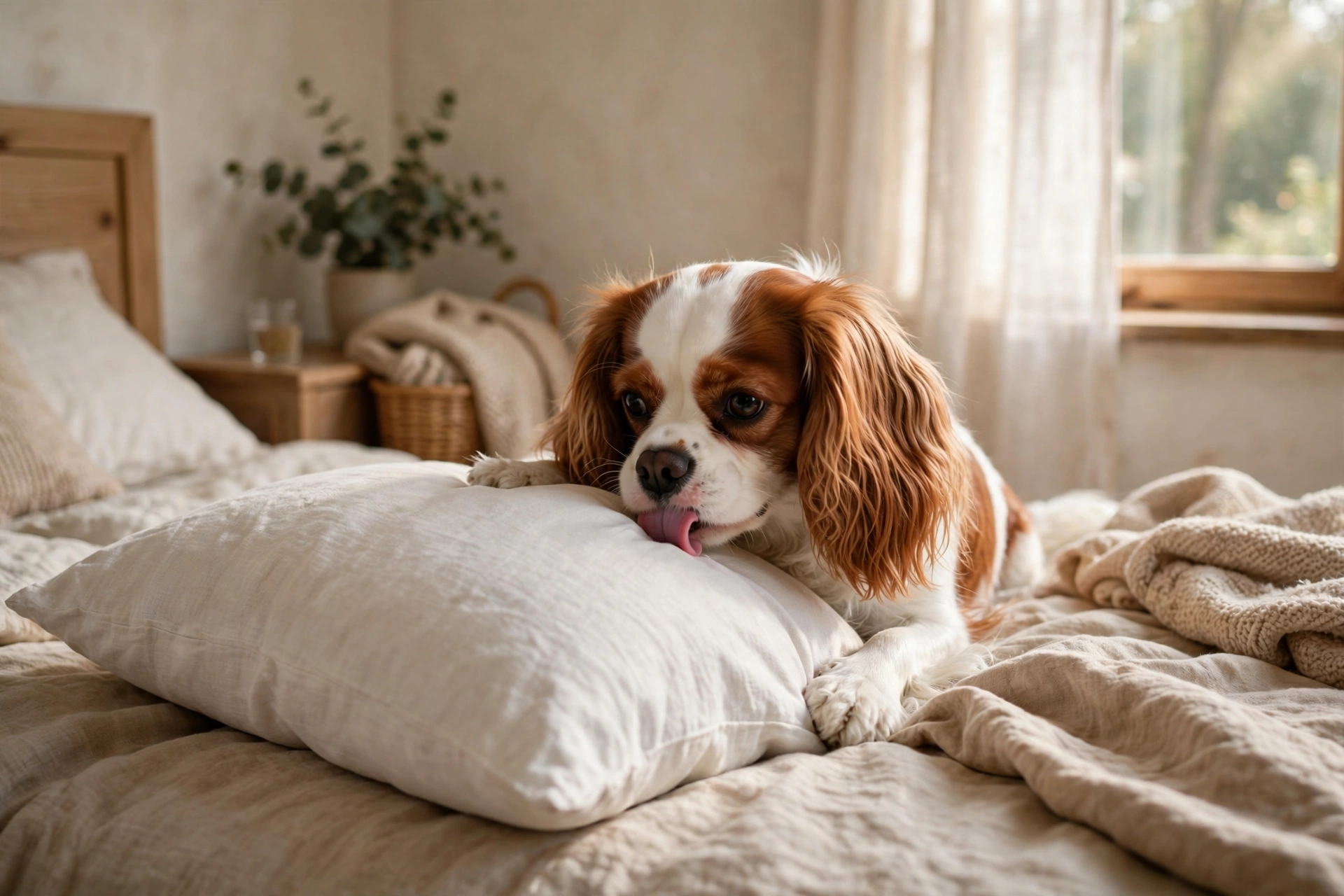
What it means: Your pillow is basically a concentrated bottle of your scent. Your hair, skin oils, and sweat all soak into the fabric every night, and to your dog’s powerful nose, it’s the most interesting thing in the house. Licking your pillow is your dog’s way of staying close to you when you’re not there — a scent-based cuddle, if you will.
What to do: This reason is really about love. If the licking is light and your pillow survives, enjoy the compliment. To keep things fresh, wash your pillowcase regularly and consider leaving your dog a worn t-shirt or blanket when you’re away, so they have something that smells like you to snuggle with instead.
Helpful pick: Snuffle Mat for Dogs — hide treats in it so your dog has a fun, scent-based activity that isn’t your pillow.
3. Anxiety or Stress
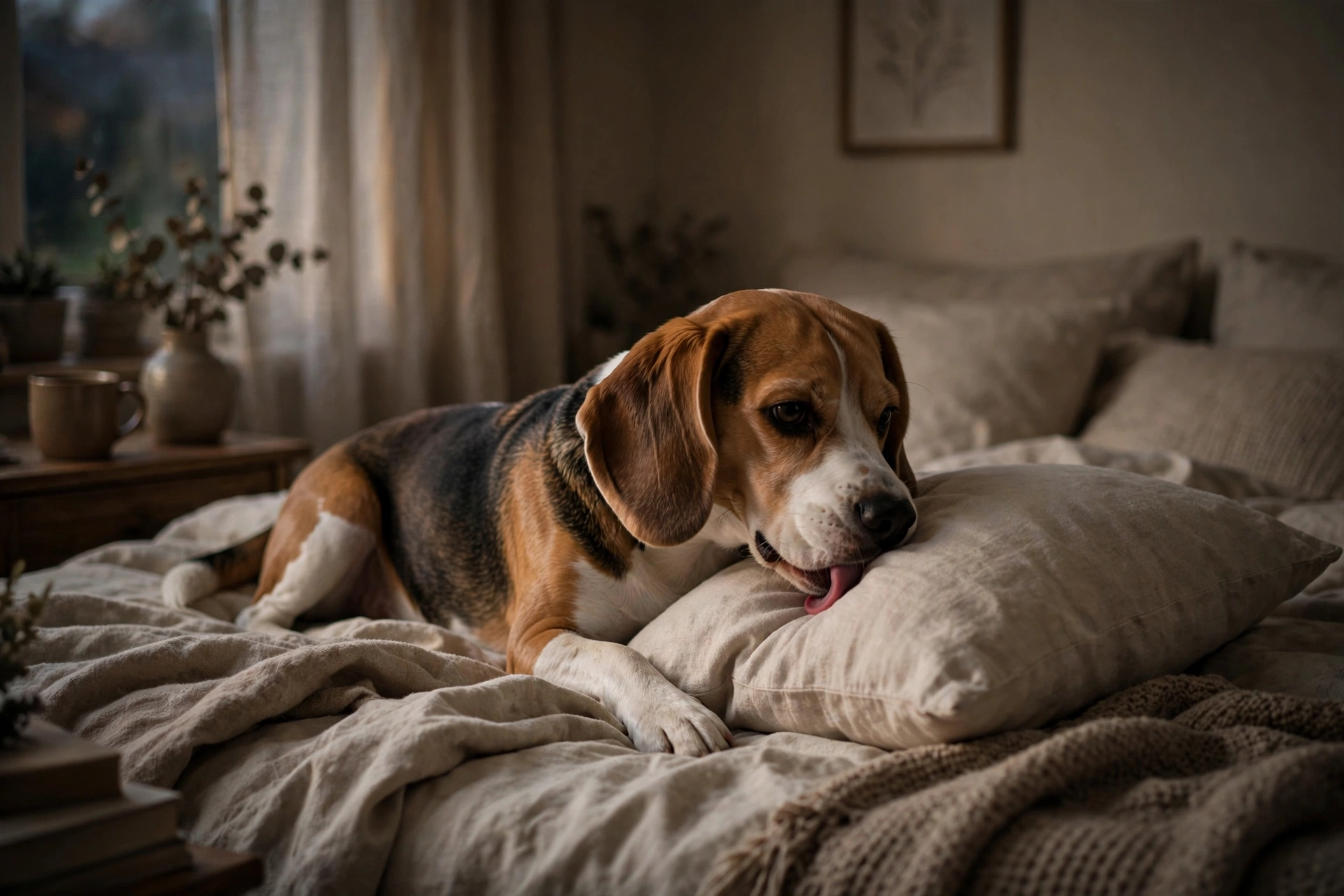
What it means: Dogs who feel nervous, lonely, or overwhelmed often turn to repetitive behaviors like licking to cope. If your dog licks the pillow mostly when you’re gone, during storms, or after a change in routine (a move, a new pet, a new baby), anxiety is the likely driver. Watch for companion signs: pacing, whining, chewing, clinginess, or accidents in the house.
What to do: Address the anxiety, not just the licking. Keep departures and arrivals low-key, stick to a predictable routine, and give your dog a safe “den” space. Calming aids can help take the edge off during stressful moments, and for persistent anxiety, a chat with your vet or a certified behaviorist is the smart move.
Helpful pick: ADAPTIL Calm Home Diffuser — releases a calming pheromone that can help settle an anxious dog.
4. Boredom
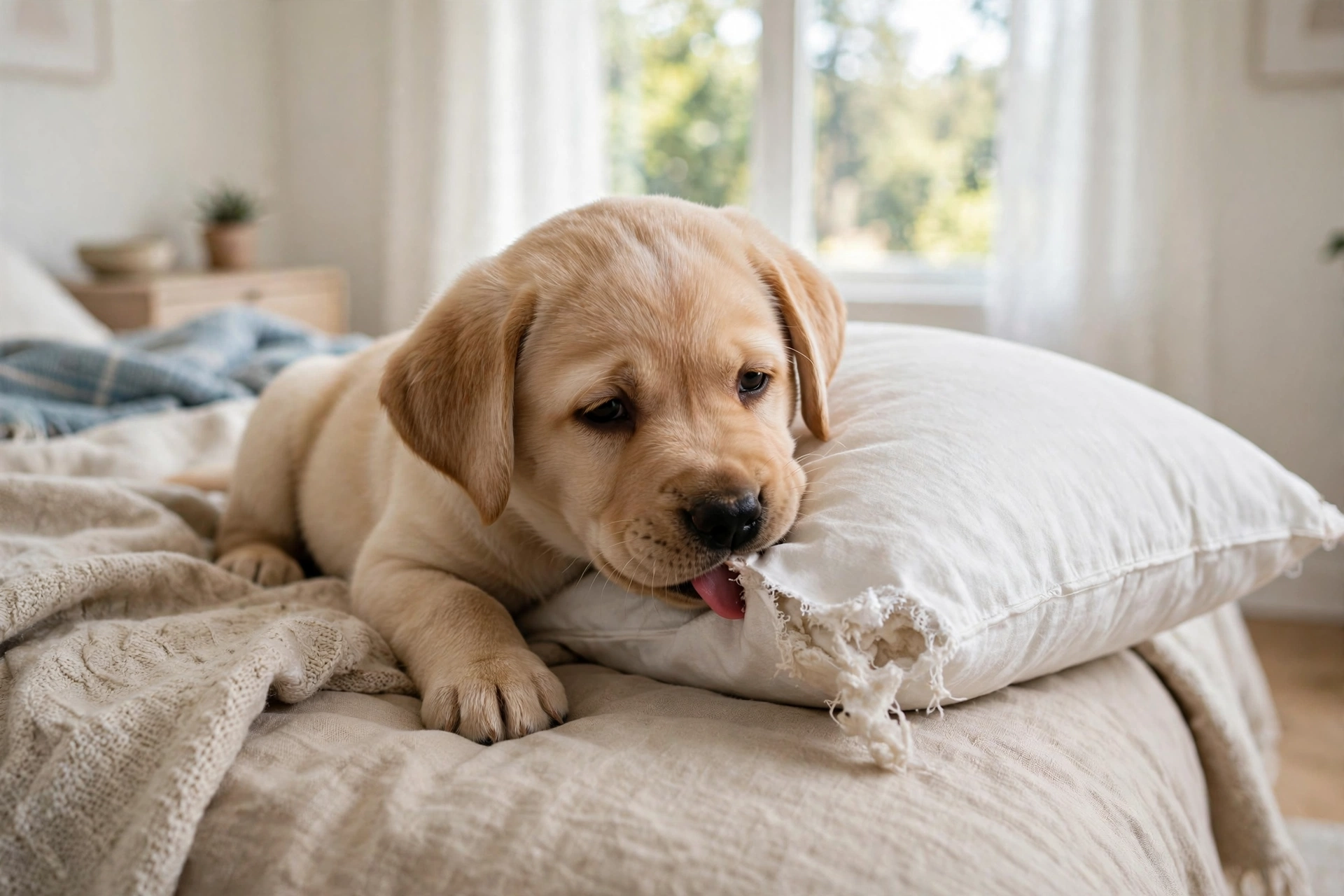
What it means: A dog with nothing to do will invent their own entertainment — and a pillow is conveniently right there. Bored dogs lick, chew, dig, and pace simply because their brains need something to work on. If your dog tends to lick the pillow during the day while you’re at work or after a lazy weekend, boredom is probably the culprit.
What to do: Tire out the brain, not just the body. Puzzle toys, training games, snuffle mats, and even a midday walk can burn off the mental energy that fuels pillow licking. Rotate your dog’s toys every few days to keep things interesting, and scatter-feed meals instead of using a bowl.
Helpful pick: Outward Hound Tornado Puzzle Toy — a boredom-busting puzzle that keeps busy minds off your bedding.
5. They Like the Taste
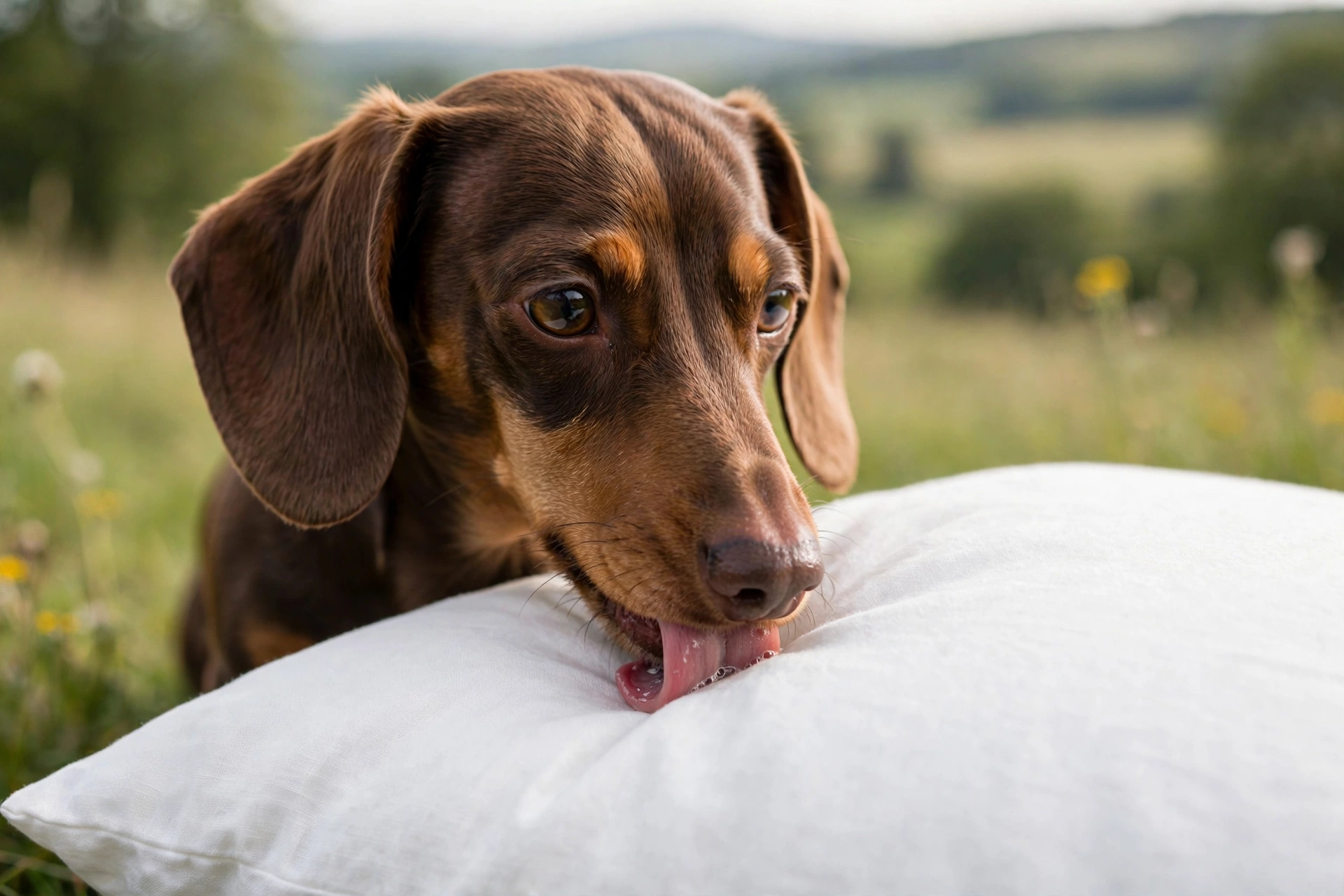
What it means: Pillows collect sweat, skin oils, hair products, and tiny crumbs over time — a flavor buffet for a curious dog. Some dogs simply enjoy the salty taste of dried sweat. One important caution: laundry detergents, scented dryer sheets, and fabric softeners can be irritating or even toxic to dogs in large amounts. If your dog is drawn to a freshly washed pillow, the fragrance chemicals may be the attraction — and that’s worth addressing.
What to do: Wash your bedding with a fragrance-free, pet-safe detergent and skip heavily scented fabric softeners. If your dog licks freshly laundered pillows obsessively, a bitter-tasting (but safe) deterrent spray can break the habit. And if your dog shows stomach upset, drooling, or loss of appetite after licking laundry products, call your vet — these can be signs of irritation from cleaning chemicals.
Helpful pick: Grannick’s Bitter Apple Spray — a safe, bitter deterrent that discourages licking on fabrics.
Is Pillow Licking Harmful?
For most dogs, occasional pillow licking is harmless. The main risks come with excessive licking:
- Detergent chemicals: Scented laundry products can irritate your dog’s mouth and stomach. Switch to fragrance-free, pet-safe detergents.
- Fabric damage: Persistent licking (and the chewing that often follows) can ruin pillows — and swallowed fabric pieces can cause intestinal blockages.
- Compulsive behavior: If licking becomes obsessive and your dog can’t be redirected, it may be a compulsive disorder that needs professional help.
- Hygiene: Your dog’s saliva ends up on the pillow you sleep on — wash your pillowcase more often if this habit continues.
When to See the Vet
Call your vet if the pillow licking starts suddenly, your dog can’t be distracted from it, or it’s paired with warning signs like appetite changes, vomiting, excessive drooling, lethargy, or weight loss. These can point to nausea, dental pain, gastrointestinal upset, or an anxiety disorder that needs professional treatment. A sudden new licking habit in an older dog is also worth a checkup, since it can occasionally reflect cognitive changes. Better to rule out medical causes early than to assume it’s purely behavioral.
Simple fix: give your dog a designated comfort item, keep bedding clean with pet-safe products, and redirect the habit with training and enrichment. Read more about similar behaviors in our guides on why dogs lick the couch and why dogs lick the floor.
Frequently Asked Questions
Is it bad to let my dog lick my pillow?
Occasional licking is fine for most healthy dogs. Just keep your bedding washed with pet-safe, fragrance-free detergent, and don’t let it become an obsessive habit.
Why does my dog lick my pillow at night?
Nighttime licking is often self-soothing before sleep — similar to a bedtime routine. It can also signal separation anxiety or simply that your dog finds your scent comforting at bedtime.
How do I stop my dog from licking my pillow?
Give your dog their own comfort toy, increase daily enrichment, use a safe deterrent spray on the pillow, and reward your dog for settling on their own bed. Consistency matters.
Could pillow licking be a medical problem?
Rarely, excessive licking can be linked to gastrointestinal issues, dental problems, or nausea. If the behavior starts suddenly or comes with appetite changes, vomiting, or drooling, see your vet.
Is my dog trying to tell me something by licking my pillow?
Usually it’s simple: comfort, your scent, or boredom. But if the licking is new, intense, or paired with other changes (lethargy, appetite loss, anxiety signs), treat it as a signal worth investigating.
Keep reading: Why Does My Dog Lick My Hands? · Signs Your Dog Is Stressed
As an Amazon Associate, PetPostHub earns from qualifying purchases.