Why Does My Dog Bark at the TV? 6 Reasons

You’ve finally settled in for a cozy movie night. The popcorn is ready, the lights are dim, and then — a dog barks on screen, and suddenly your own pup is losing it. If you’ve ever wondered why does my dog bark at the TV, you’re far from alone. Screen barking is one of the most common — and most amusing — dog behaviors, and it’s almost always completely normal.
Dogs don’t understand that the people, animals, and sounds coming from your TV aren’t actually in the room. To them, that flickering box of moving images and mystery sounds is a full-blown sensory event. Let’s break down the six real reasons behind it and what you can do about the noise.
Quick Answer
Dogs bark at the TV because they see moving animals or people and hear realistic sounds they can’t tell apart from real life. It’s driven by instinct, excitement, confusion, or anxiety — not bad behavior — and it usually responds well to simple training.
Table of Contents
- 1. He Sees Movement and Other Animals
- 2. He Hears Sounds You Barely Notice
- 3. He’s Being Territorial
- 4. He’s Frustrated and Confused
- 5. He’s Excited and Wants to Play
- 6. He’s Anxious or Startled
- How to Calm TV Barking
- Frequently Asked Questions
1. He Sees Movement and Other Animals
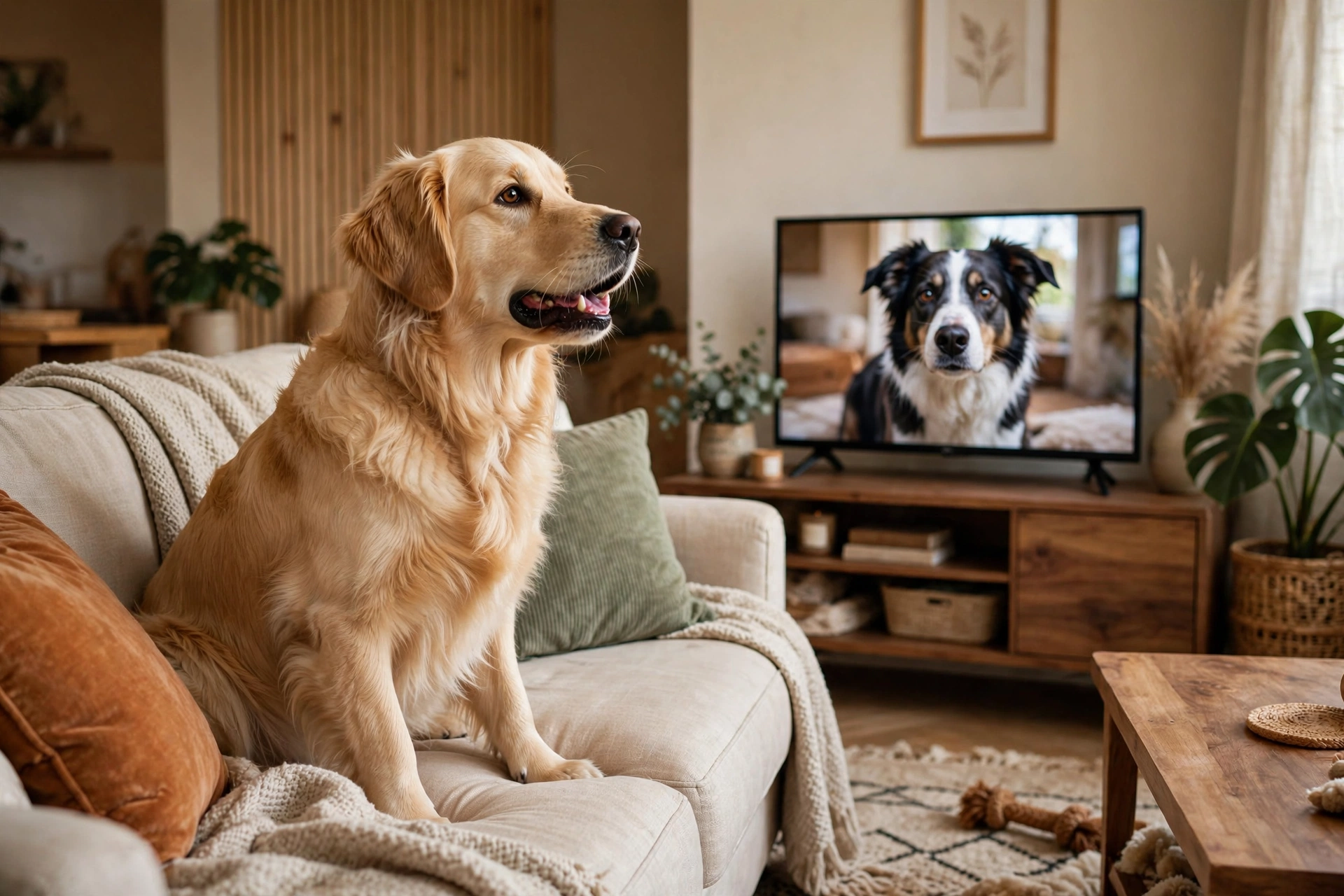
What it means: Dogs are hardwired to notice motion. Their vision processes flicker faster than ours, so on a modern high-refresh TV, they genuinely perceive the moving animals, people, and cars on screen. A squirrel in a nature documentary, a galloping horse in a Western, or another dog in an ad — your pup’s brain files all of them under “real and present.”
What to do: Notice which scenes set your dog off. Wildlife documentaries and action sequences are the biggest offenders. If your dog only barks at certain genres, you’ve found his trigger — and simply muting or avoiding those scenes is half the battle.
Helpful pick: Outward Hound Nina Ottosson Tornado Puzzle Toy — keeps his brain busy so the screen loses its pull.
2. He Hears Sounds You Barely Notice

What it means: A dog’s hearing is roughly four times more sensitive than a human’s, and they pick up frequencies we can’t hear at all. The TV doorbell is the classic example — to you it’s a background prop, but to your dog it’s someone knocking right now. Animal whines, sirens, squeaky toys in commercials, and even high-pitched sound effects can all set off a barking episode.
What to do: Try lowering the volume during known trigger scenes, or enable subtitles and turn the sound down a notch during shows with lots of animal noises. Over time, most dogs learn that TV doorbells never bring actual visitors.
Helpful pick: Yogasleep Dohm Classic White Noise Machine — gentle background sound can soften the sharpest TV triggers.
3. He’s Being Territorial
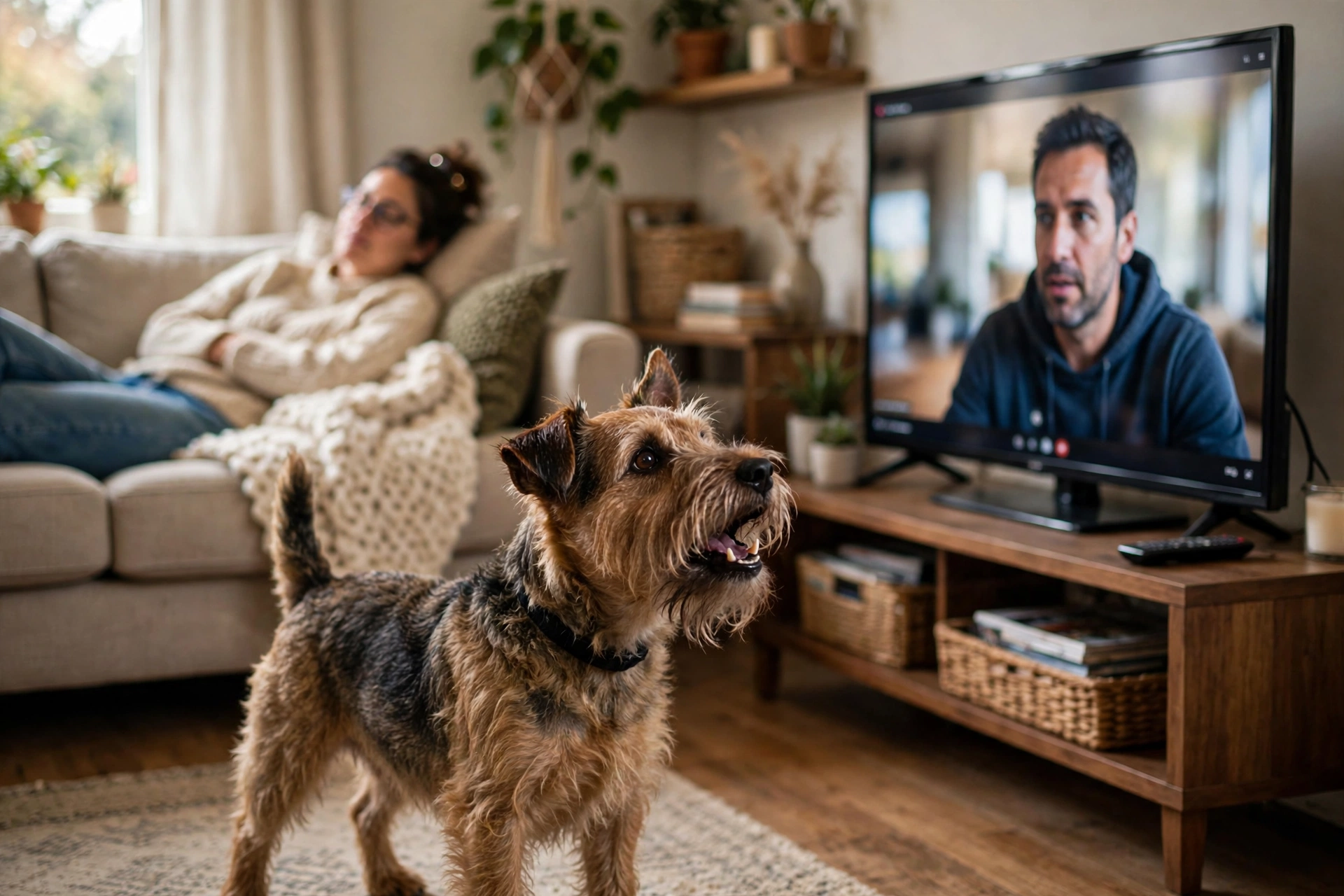
What it means: Guardian and herding breeds in particular may see a figure approaching on screen and read it as an intruder. Your dog may bark to warn you — and from his point of view, he’s doing his job brilliantly. This is the same instinct behind barking at the mail carrier, just projected onto pixels.
What to do: Stay calm and matter-of-fact. If you leap up or laugh nervously, your dog reads your energy as confirmation that something really is wrong. Quietly redirect him, and thank him for the warning — then carry on. He’s more likely to settle when you clearly aren’t worried.
Helpful pick: Zesty Paws Calming Chews — supports everyday calm for dogs who overreact to stimuli.
4. He’s Frustrated and Confused
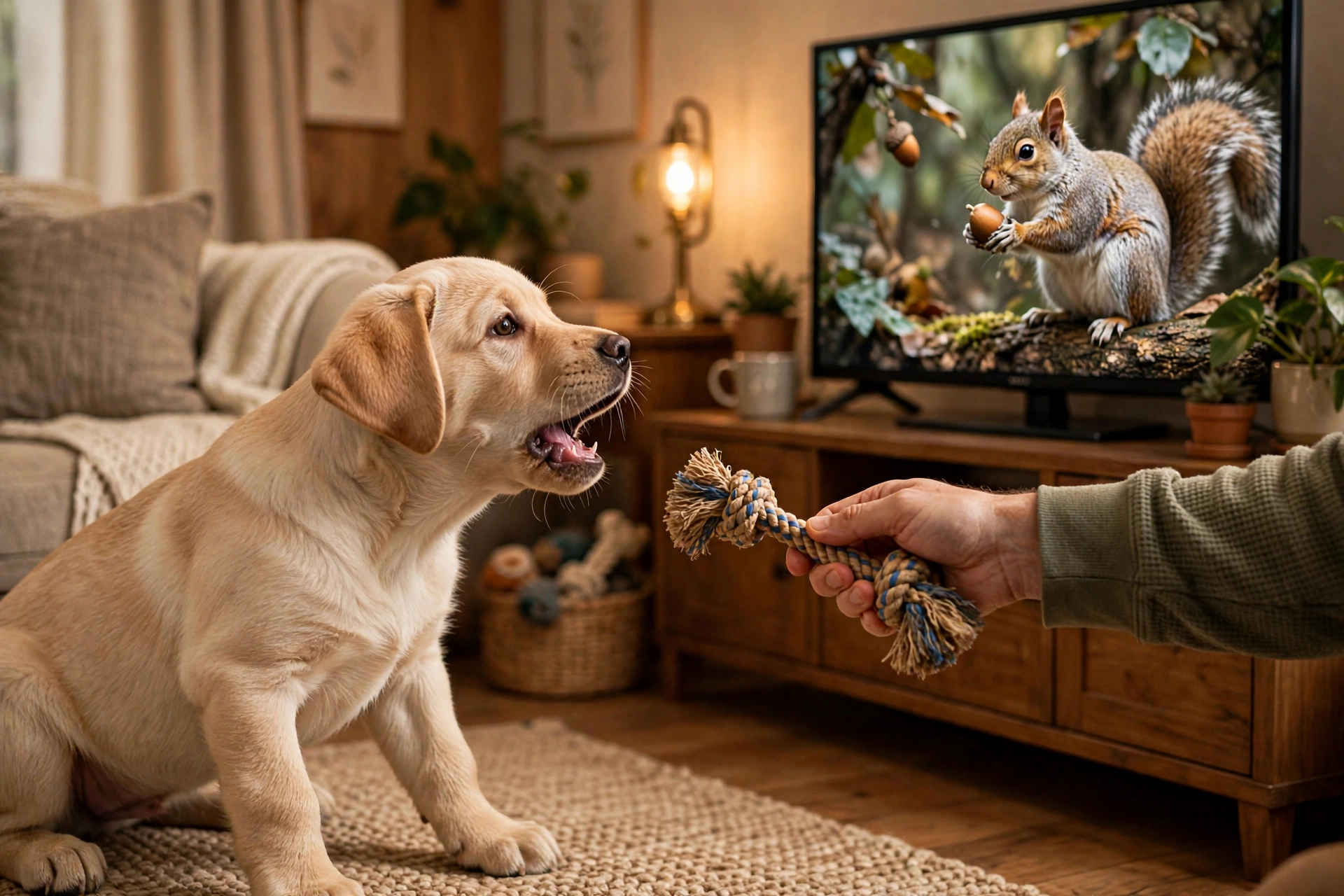
What it means: Many dogs charge the TV or peek behind it, genuinely trying to find the animal they can see and hear. When there’s nothing there, the mismatch between their senses and reality is genuinely confusing — and confusion often comes out as barking. Puppies and young dogs do this the most, since they’ve had the least practice with screens.
What to do: Let him investigate safely once, then redirect. Blocking access to the front of the TV (a baby gate or furniture arrangement works) breaks the charge-and-bark loop. Most dogs figure out the game is unwinnable within a few weeks of calm, consistent redirection.
Helpful pick: KONG Classic — stuff it with peanut butter and freeze it for a long, satisfying distraction.
5. He’s Excited and Wants to Play

What it means: Some dogs see other dogs on screen and get thrilled — tail up, body bouncing, barking with pure joy. This is the canine equivalent of a kid yelling at their favorite cartoon. If your dog’s body language is loose and wiggly, the barking is excitement, not alarm.
What to do: This is actually the friendliest version of TV barking, and you don’t have to eliminate it entirely. Give him a short play break during commercials, or reward quiet moments with treats. He’ll learn that staying calm earns him something better than barking does.
Helpful pick: Chuckit! Classic Ball Launcher — a quick pre-movie fetch session burns off the excitement energy.
6. He’s Anxious or Startled

What it means: Explosions, gunfire, thunderstorms, and screaming in horror movies can genuinely frighten a sensitive dog. If he barks, tucks his tail, or presses against you during loud scenes, he’s not being dramatic — he’s asking for safety. Anxiety-driven barking deserves extra patience, never punishment.
What to do: Create a cozy alternative spot away from the speakers — a bed, a crate with the door open, or simply the couch beside you. Comfort him calmly. Reducing the volume during action movies or switching genres is one of the simplest fixes of all.
Helpful pick: SmartPetLove Snuggle Puppy — the heartbeat comfort toy helps anxious dogs settle anywhere in the house.
How to Calm TV Barking
Once you know why your dog is barking, fixing it is mostly a matter of consistency. These steps work for almost every screen-barking dog:
- Reward the quiet: Keep treats handy during movie time. The moment your dog glances at the TV and stays silent, mark it with a “yes” and a treat. Calm behavior gets paid; barking doesn’t.
- Desensitize gradually: Play animal-heavy videos at low volume for short sessions, treating calm reactions. Slowly increase the volume over days as he stays relaxed.
- Tire him out first: A dog who’s had a good walk or play session before your show has far less energy to spend barking at pixels.
- Give him a job: A stuffed KONG, a lick mat, or a chew during your favorite show keeps his brain and mouth occupied on something legal.
- Stay neutral: Don’t yell — to your dog, your shouting just sounds like you’re barking along. Calm redirections teach faster than raised voices.
- Manage the environment: If your dog has a favorite trigger scene — like the ad with the barking puppy or the show’s theme song — note the timestamp and be ready with a treat before it plays. Preventing a bark is always easier than interrupting one. You can also try sitting with your dog during trigger-heavy shows so he feels included rather than shut out, and consider whether your seating arrangement puts him uncomfortably close to the speakers.
- Practice “settle” separately: Teach a solid “settle” or “place” command away from the TV first, then bring it into movie night. When your dog has a well-practiced spot and knows that settling there earns rewards, the TV becomes background noise instead of a call to action. This single command can solve a surprising number of household barking problems, not just screen barking.
Frequently Asked Questions
Is it normal for dogs to bark at the TV?
Yes, it’s completely normal. Dogs perceive TV motion and sound as real stimuli, and barking is their instinctive response. It’s most common in young dogs and visual breeds like herders and terriers.
Do dogs actually see what’s on TV?
Modern high-refresh screens let dogs perceive moving images much more clearly than old CRT TVs did. They can recognize animals, people, and motion — which is why screen reactivity has increased over the years. On the old boxy televisions, dogs mostly saw a flickering blur, but today’s crisp screens look close enough to reality that your dog’s brain treats them as the real thing. Interestingly, some dogs ignore the picture entirely and react only to the sound, while others lock onto the visuals and barely flinch at the audio. Knowing which sense drives your dog’s reaction makes your training plan much more targeted.
Why does my dog only bark at the doorbell on TV?
Doorbell sounds trigger a deeply trained alert response. Your dog has learned that doorbell = someone arriving, and he can’t distinguish a recorded one from the real thing.
Should I punish my dog for barking at the TV?
No. Punishment increases anxiety and makes the barking worse. Redirection and rewarding quiet behavior are far more effective and keep your dog’s trust intact. Remember that your dog isn’t trying to ruin your evening — he’s responding to what his senses tell him is real. Meeting that reaction with patience turns a frustrating habit into a fun little training project, and most dogs pick up the new routine within a week or two of consistent practice.
Can dogs learn to ignore the TV?
Yes. Most dogs desensitize on their own with calm, consistent redirection. If the barking is intense and persistent, a certified trainer can help with structured desensitization.
Keep Reading
- Why Does My Dog Bark at Nothing at Night? 7 Reasons
- How to Train Your Dog to Stop Barking: 8 Methods
- Why Does My Dog Stare at the Wall? 6 Reasons
- Dog Body Language: The Complete Guide
- Signs Your Dog Is Stressed (and What to Do)
As an Amazon Associate, PetPostHub earns from qualifying purchases.